


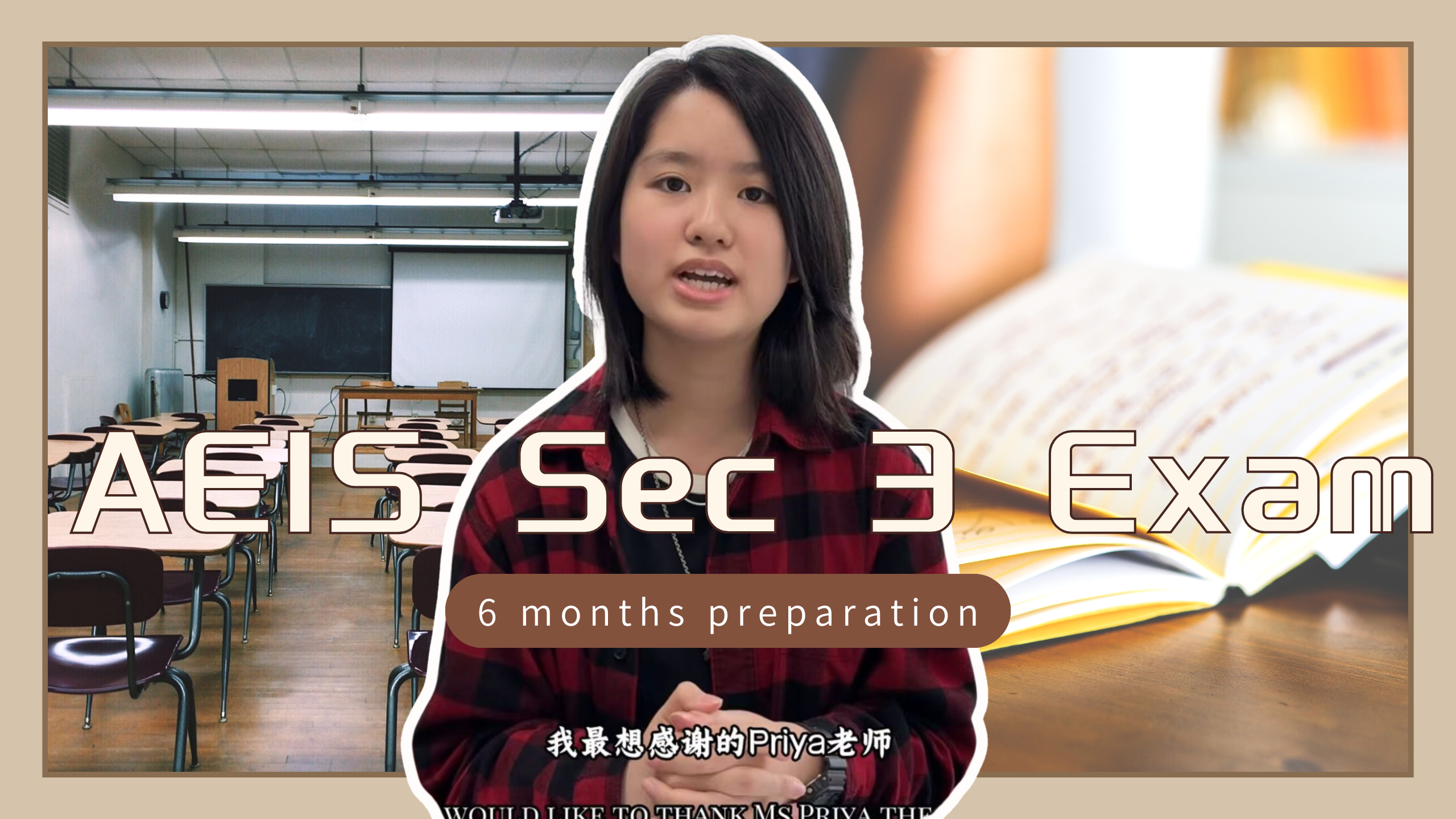
A Strategic Choice at 16: Entering Singapore’s Local Education System Through AEIS
When planning their education journey, most students choose the most familiar or conventional path. However, some students make deliberate decisions early on, guided by long-term academic goals rather than short-term comfort.
At the age of 16, Yan Zixuan made such a decision. After successfully passing the AEIS Secondary 3 examination, she entered a Singapore government secondary school, transitioning from an international school background into Singapore’s local education system.
Her own experience reflects how careful academic planning, combined with a clear university goal, can shape a student’s pathway through Singapore’s public education framework.
From an International School to Singapore’s Local System
Before preparing for AEIS, Zixuan was studying at an international school in China and had just progressed to Senior High Year 1. From an external perspective, she was already on a familiar and relatively smooth academic route.
However, her long-term goal had always been clear: the National University of Singapore (NUS).
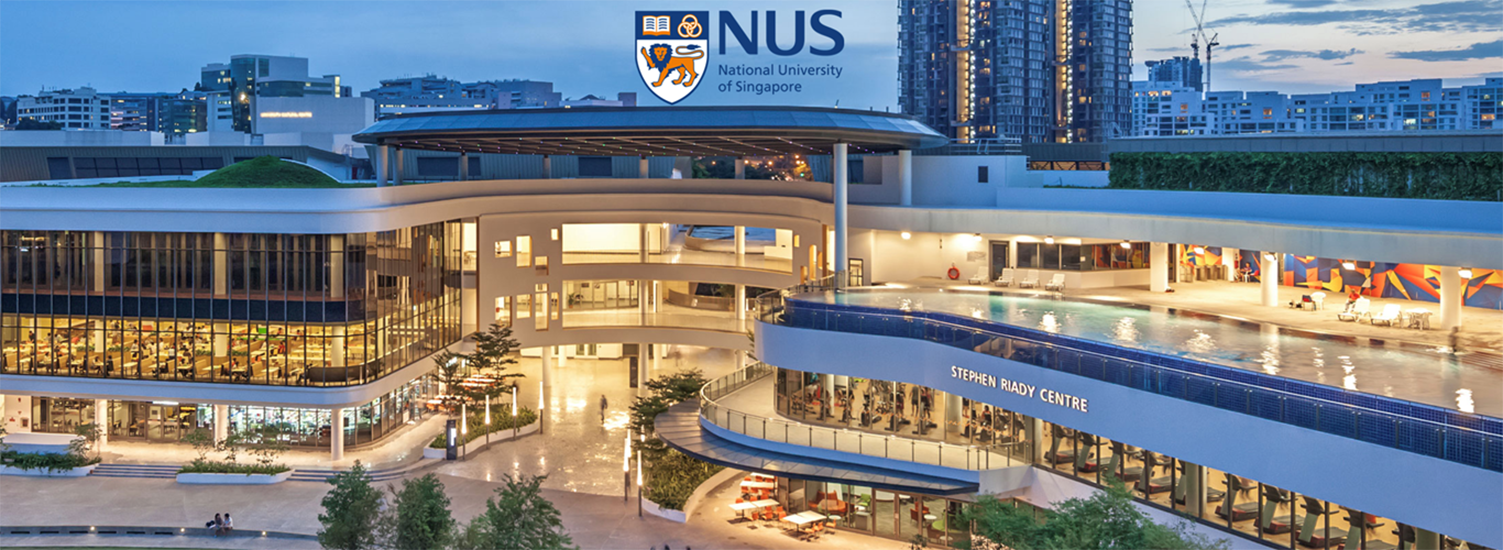
While international school pathways often lead to overseas universities, Zixuan and her family conducted an in-depth comparison of different education systems and progression routes. They observed that students entering Singapore’s top public universities through overseas international school routes were comparatively few, and competition was highly uncertain.
Rather than relying on a pathway with limited alignment to Singapore’s public university system, Zixuan began exploring alternatives that offered clearer academic continuity.
Why AEIS Was Chosen Over Other Options
During her planning process, AEIS was not the only option considered. Given her age and academic background, direct entry via the GCE O-Level examination was also a realistic alternative.
From an academic standpoint, this option would not have required her to “repeat” a school year, and successful results could lead directly to Junior Colleges (JC) or Polytechnics.
However, further analysis revealed a key structural difference. Local government school students benefit from institutional advantages such as CCA (Co-Curricular Activities) points and Higher Chinese bonus points, which contribute to O-Level score reductions. These advantages are not available to private candidates.
For students targeting Singapore’s most competitive Junior Colleges, this difference can be significant.
As a result, Zixuan and her family concluded that entering the local school system earlier through AEIS Secondary 3 would offer greater long-term stability and alignment, despite the higher short-term challenge.
Preparing for AEIS Secondary 3
AEIS Secondary 3 is widely regarded as one of the more academically demanding entry levels. Preparation requires students to adapt quickly to:
-
Advanced English vocabulary and reading comprehension
-
Full English mathematics papers with complex problem statements
-
Examination logic aligned with Singapore’s government school syllabus
Zixuan began her AEIS preparation at Hanbridge Institute in March. Within a limited timeframe, she focused on strengthening her English foundation, building subject-specific vocabulary, and adjusting to the expectations of local examinations.
Her preparation required discipline, consistency, and adaptability—qualities that became increasingly evident throughout the process.
By passing the AEIS Secondary 3 examination, Zixuan successfully entered Singapore’s government secondary school system. This marks an important milestone, but also the beginning of a longer academic journey.
Her next stages will include:
-
Completing local secondary education
-
Sitting for the Singapore-Cambridge GCE O-Level examination
-
Progressing to Junior College (JC)
-
Preparing for A-Level studies and university admission
Each step requires sustained effort and academic commitment, but her pathway now aligns structurally with Singapore’s public education framework.
Reflections on Educational Pathways
There is no single “best” education pathway. Each option carries different requirements, risks, and long-term implications.
What matters most is whether the chosen route:
-
Aligns with the student’s academic goals
-
Matches the student’s learning profile and readiness
-
Is supported by a clear understanding of the education system
Zixuan’s case illustrates how informed decision-making, supported by family discussion and academic evaluation, can lead to a pathway that prioritises long-term outcomes over short-term convenience. Passing AEIS Secondary 3 represents a strong foundation rather than a final achievement. The journey ahead will involve further academic challenges, including national examinations and university preparation.
Hanbridge Institute is proud to have supported Zixuan during this important transition and looks forward to seeing her continued progress within Singapore’s education system. We hope that, in the future, she may return to campus not only as a graduate of Singapore’s public education pathway, but also as a Hanbridge alumni, sharing her experiences with students who are beginning similar journeys.