


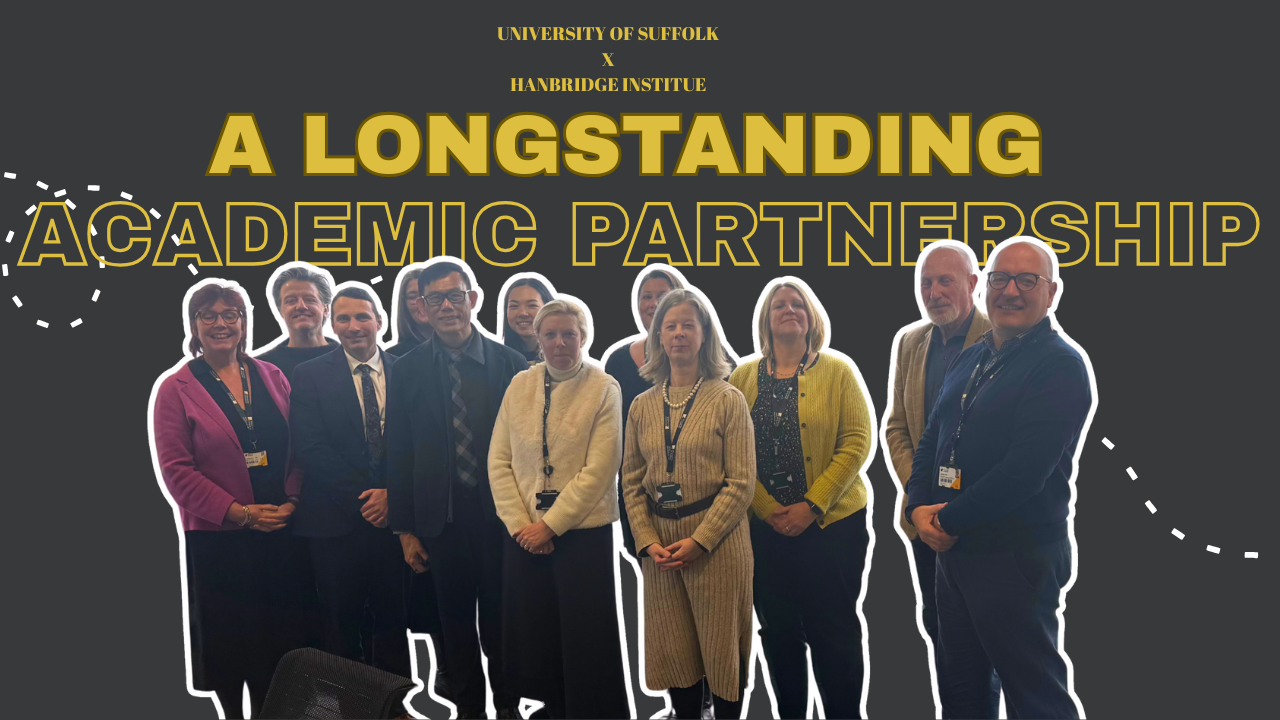
A Longstanding Academic Partnership Built on Continuous Exchange
Since the establishment of collaboration between Hanbridge Institute and the University of Suffolk, both institutions have maintained a stable, continuous, and two-way academic exchange and quality assurance framework. Over the past four years, academic representatives from the University of Suffolk have undertaken regular visits to Hanbridge Institute in Singapore, providing opportunities for reflective engagement with management and teaching teams to consider curriculum alignment, the effectiveness of teaching delivery, and student learning outcomes.
Associate Prof Stuart Agnew, Associate Professor and Director of the Centre for Academic and International Partnerships, together with Ms Fiona Fisk, Academic Registrar and Head of Student Administration and Services, have personally visited Hanbridge Institute to engage with staff and students on curriculum planning, student support systems, and academic standards implementation. These recurring visits ensure that programmes delivered overseas continue to operate in full alignment with the University of Suffolk’s home-campus teaching and assessment frameworks.
In parallel, the University of Suffolk appoints external examiners to conduct independent moderation of student dissertations and academic assessments at Hanbridge. All degree certificates awarded under the collaboration are issued directly by the University of Suffolk, fully recognised internationally and accredited by the Chinese Service Center for Scholarly Exchange (CSCSE). This comprehensive academic governance structure forms the foundation of the partnership’s long-term stability and safeguards the credibility and recognition of every qualification awarded.
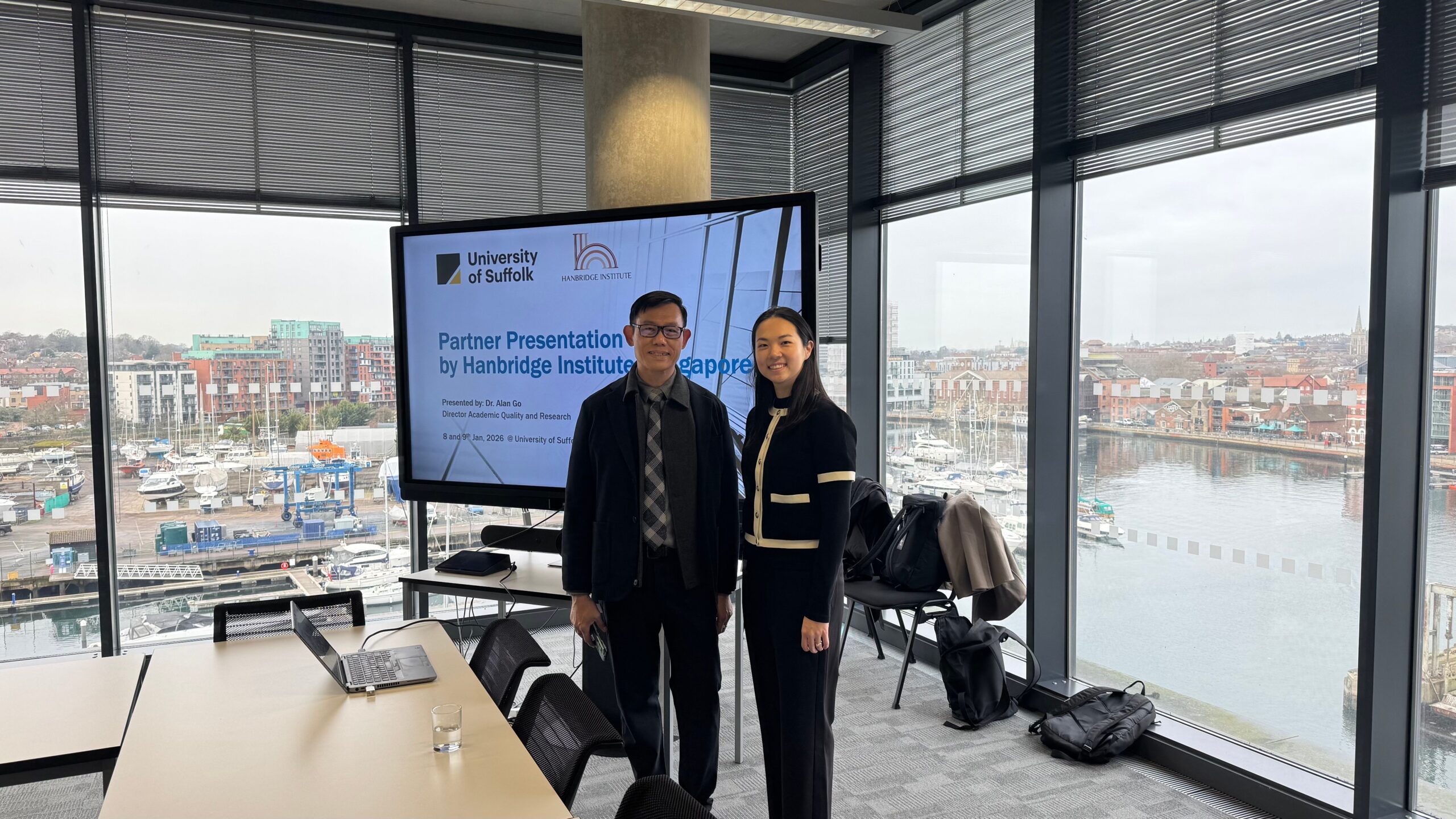
Hanbridge Academic Leadership Visits the University of Suffolk, UK
Building upon years of reciprocal engagement, in early this month, Hanbridge Institute’s Chairman of the Academic Board, Dr Alan Go, together with Deputy Academic Head, Preparatory Courses, Professor Clarissa Wong, were invited to visit the University of Suffolk’s main campus in the United Kingdom.
During the visit, the Hanbridge Institute delegation toured teaching facilities, research environments, and digital learning infrastructure, and held in-depth discussions with Suffolk’s academic teams on programme structure, module design, learning outcome assessment, and student support frameworks. Dr Alan Go also presented Hanbridge Institute’s teaching practice in Singapore, student learning profiles, and classroom implementation models, further strengthening mutual understanding and academic alignment between both institutions.
Under this shared academic vision, both institutions formally deepened collaboration and launched the new MSc in Data Science & Artificial Intelligence programme. The programme adopts the latest University of Suffolk module framework while incorporating Singapore’s industry context and employment landscape, ensuring students receive training that meets international academic standards while remaining relevant to real-world professional application.

Sustained Trust, Shared Responsibility for Academic Quality
The true value of educational collaboration lies not in name association, but in continuous academic co-development, transparent quality assurance, and long-term institutional trust.
The partnership between Hanbridge Institute and the University of Suffolk is built upon years of reciprocal visits, external examination, curriculum co-development, and continuous feedback mechanisms. Moving forward, both institutions will continue regular academic exchanges, programme reviews, and resource sharing, ensuring that every student completing a University of Suffolk programme at Hanbridge Institute studies under the same academic standards upheld on the UK home campus.
At Hanbridge Institute, we remain committed to delivering education that is rigorous, credible, and globally recognised—grounded in a strong culture of quality, guided by responsibility, and shaped by a sustained commitment to long-term academic vision.