


What is SEC? Singapore’s New 2027 Exam Framework Explained
Singapore’s education system is undergoing one of its biggest changes in recent years. From 2027 onwards, students will no longer receive the traditional GCE O-Level or N-Level certificates. Instead, students will graduate with a new national qualification known as the Singapore-Cambridge Secondary Education Certificate (SEC).
For many parents and students familiar with the current system, this raises important questions:
- What is SEC in Singapore?
- Is the GCE O-Level grading system changing?
- What happened to Express and Normal streams?
- How will students be assessed moving forward?
In this article, we explain the key changes parents and students need to know about the new SEC system and what to expect in the coming years.
What is SEC in Singapore?
The SEC, or Singapore-Cambridge Secondary Education Certificate, is Singapore’s new national secondary school qualification that will replace both the GCE O-Level and N-Level certificates from 2027 onwards.
Instead of separating students based on academic streams, SEC reflects Singapore’s move towards a more flexible and inclusive education system under Full Subject-Based Banding (Full SBB).
This means students will no longer graduate under different stream labels, but under one common certificate.
No More Express, Normal (Academic), and Normal (Technical) Streams
A major shift already began in 2024.
Under the new Full SBB system, Singapore secondary schools no longer place students into:
- Express
- Normal (Academic)
- Normal (Technical)
Instead, students are now grouped based on subject levels:
- G1
- G2
- G3
This change aims to give students more flexibility to study subjects at different levels based on their strengths.
What Are G1, G2, and G3?
Under the SEC system:
| Level | Rough Equivalent |
|---|---|
| G1 | Former N(T) standard |
| G2 | Former N(A) standard |
| G3 | Former O-Level standard |
Students can take subjects at different levels depending on their abilities.
For example:
- A student may take Mathematics at G3
- English at G2
- Science at G3
This allows students to learn at a pace and difficulty level better suited to their strengths instead of being restricted to one stream.
How the SEC Differs from the Current O-Level System
Previously, students followed fixed academic streams and sat for separate national examinations:
- GCE O-Level
- N-Level (Academic)
- N-Level (Technical)
Under SEC:
- Students receive one unified national certificate
- Subjects are graded according to G1, G2, or G3 levels
- Students can mix subject levels across different subjects
- Mid-year Mother Tongue written examinations in June will be removed
- English Language and Mother Tongue papers will take place together in a single September examination window
- All SEC results will be released during one consolidated results period in January
- There is greater flexibility in learning pathways
This marks a significant shift away from stream-based education towards a more personalised and flexible learning model.
Is the GCE O-Level Grading System Changing?
The current GCE O-Level grading system will gradually transition into the SEC grading framework, structured specifically to match the difficulty tier of the subject taken:
- G1 Tier: Graded using alphabetical marks (Grades A, B, C, D, and E).
- G2 Tier: Graded using numerical bands (Grades 1, 2, 3, 4, 5, and 6).
- G3 Tier: Retains the traditional O-Level mapping structure (Grades A1, A2, B3, B4, C5, C6, D7, E8, and 9).
The Singapore Examinations and Assessment Board (SEAB) has designed the SEC to better reflect students’ overall learning experiences and subject combinations instead of focusing heavily on traditional stream distinctions.
What Parents and Students Should Expect
For students entering secondary school under Full SBB:
- Learning pathways will become more flexible
- Students may study different subjects at different levels
- There will be increased emphasis on strengths-based learning
- Students may experience more mixed-form classes
For parents, the transition may initially feel unfamiliar compared to the traditional Express and Normal stream system many grew up with.
However, the intention behind SEC is to:
- Reduce academic labelling
- Encourage flexibility
- Allow students to develop according to their strengths
- Create broader progression opportunities
What About the GCE O-Level Syllabus?
Although the SEC will officially replace the O-Level system from 2027, students currently preparing under the existing framework will continue following the present syllabus during the transition period.
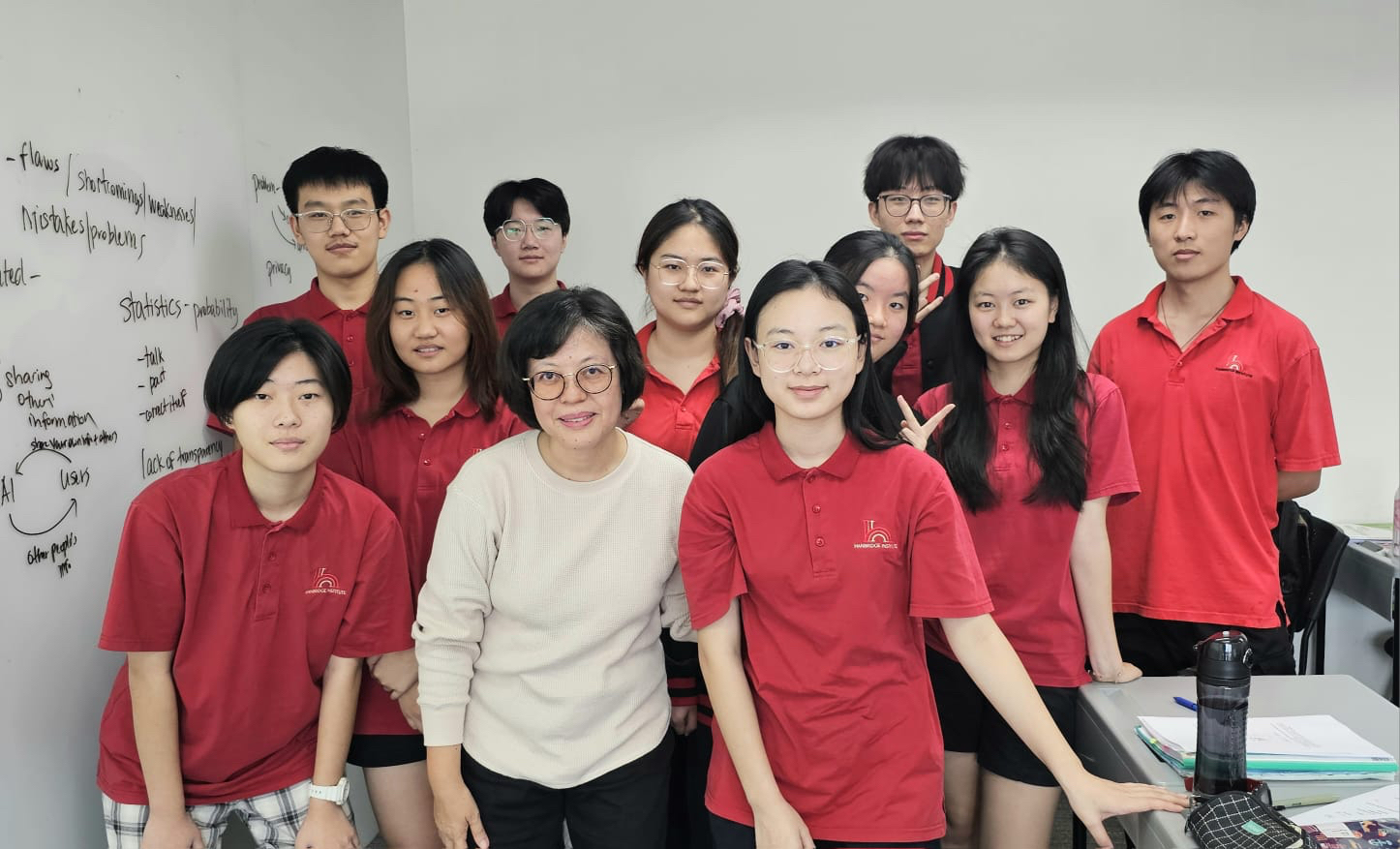
At Hanbridge Institute, we will continue teaching the GCE O-Level syllabus until November 2026 before progressively shifting towards the SEC syllabus and an updated teaching approach aligned with Singapore’s new education framework.
This ensures that students currently preparing for O-Level examinations continue to receive stability and structured academic support during the transition.
Final Thoughts
The introduction of the SEC represents a major evolution in Singapore’s education system.
While the removal of O-Level and N-Level streams may feel like a big change, the new framework aims to create a more flexible and inclusive learning environment that better supports students’ strengths and development.
For parents and students, understanding these changes early is important in planning future academic pathways and adapting to Singapore’s evolving education landscape.
At Hanbridge Institute, we remain committed to supporting students throughout this transition and preparing them for the next phase of Singapore education.
Frequently Asked Questions (FAQ)
What does SEC stand for in Singapore?
SEC stands for Singapore-Cambridge Secondary Education Certificate, Singapore’s new national secondary school qualification replacing O-Levels and N-Levels from 2027.
Are O-Levels removed in Singapore?
Yes. From 2027 onwards, students will no longer receive separate O-Level or N-Level certificates.
What are G1, G2, and G3 subjects?
G1, G2, and G3 are subject levels under Full Subject-Based Banding that roughly correspond to former N(T), N(A), and O-Level standards.
Is there still Express stream in Singapore?
No. The Express, Normal (Academic), and Normal (Technical) streams were removed under Full SBB from 2024.
Will Hanbridge Institute still teach O-Level syllabus?
Yes. Hanbridge Institute will continue teaching the GCE O-Level syllabus until November 2026 before transitioning to the SEC syllabus.
Will there still be mid-year Mother Tongue examinations under the SEC system?
No. Under the new Singapore-Cambridge Secondary Education Certificate (SEC) system, the mid-year Mother Tongue Language (MTL) written examinations held in June will be removed. Students will only sit for their written Mother Tongue papers once a year, alongside the English Language examination during the common September examination window.
Sources & References
Hanbridge Institute (2026). GCE O-Level Changes in Singapore: What Parents Need to Know About the New SEC Exams 2027. Accessed 25 May 2026.
https://hanbridge.edu.sg/gce-o-level-changes-in-singapore-what-parents-need-to-know-about-the-new-sec-exams-2027/
Singapore Ministry of Education (MOE) (2026). Schools Offering Full Subject-Based Banding (Full SBB). Accessed 25 May 2026.
https://www.moe.gov.sg/secondary/schools-offering-full-sbb
Singapore Examinations and Assessment Board (SEAB) (2026). Secondary Education Certificate (SEC). Accessed 25 May 2026.
https://www.seab.gov.sg/secondary-education-certificate-sec/
Singapore Ministry of Education (MOE). PSLE and Full Subject-Based Banding (FSBB). Accessed 25 May 2026.
https://www.moe.gov.sg/psle-fsbb/index