


What Singapore’s University Rankings Mean for Future Students
Singapore’s latest university rankings aren’t just good news for the country—they’re an important signal for parents who are planning their child’s long-term education.
According to the latest QS World University Rankings 2027, the National University of Singapore (NUS) was ranked 10th globally, while Nanyang Technological University (NTU) retained its position at 12th. Although NUS slipped slightly from its previous ranking, both universities remain among the world’s leading institutions and continue to place Singapore firmly among the top destinations for higher education.
For parents and students, the rankings offer more than just numbers. They provide insight into the quality of education, research, employer reputation, and academic standards that continue to make Singapore an attractive destination for local and international students.
Understanding the QS World University Rankings
The QS World University Rankings are among the most widely recognised university rankings globally. Universities are assessed across several key indicators, including:
- Academic reputation
- Employer reputation
- Citations per faculty
- International faculty and student diversity
- Research impact
- Sustainability and global engagement
These indicators help provide a broader picture of how universities perform both academically and professionally. While rankings may fluctuate from year to year, they often reflect long-term strengths rather than short-term changes.
For parents, this means that a child who progresses through Singapore’s school system is not only gaining strong academic foundations, but is also positioning themselves for globally recognised university options later on.
Why Singapore’s Education System Remains Strong
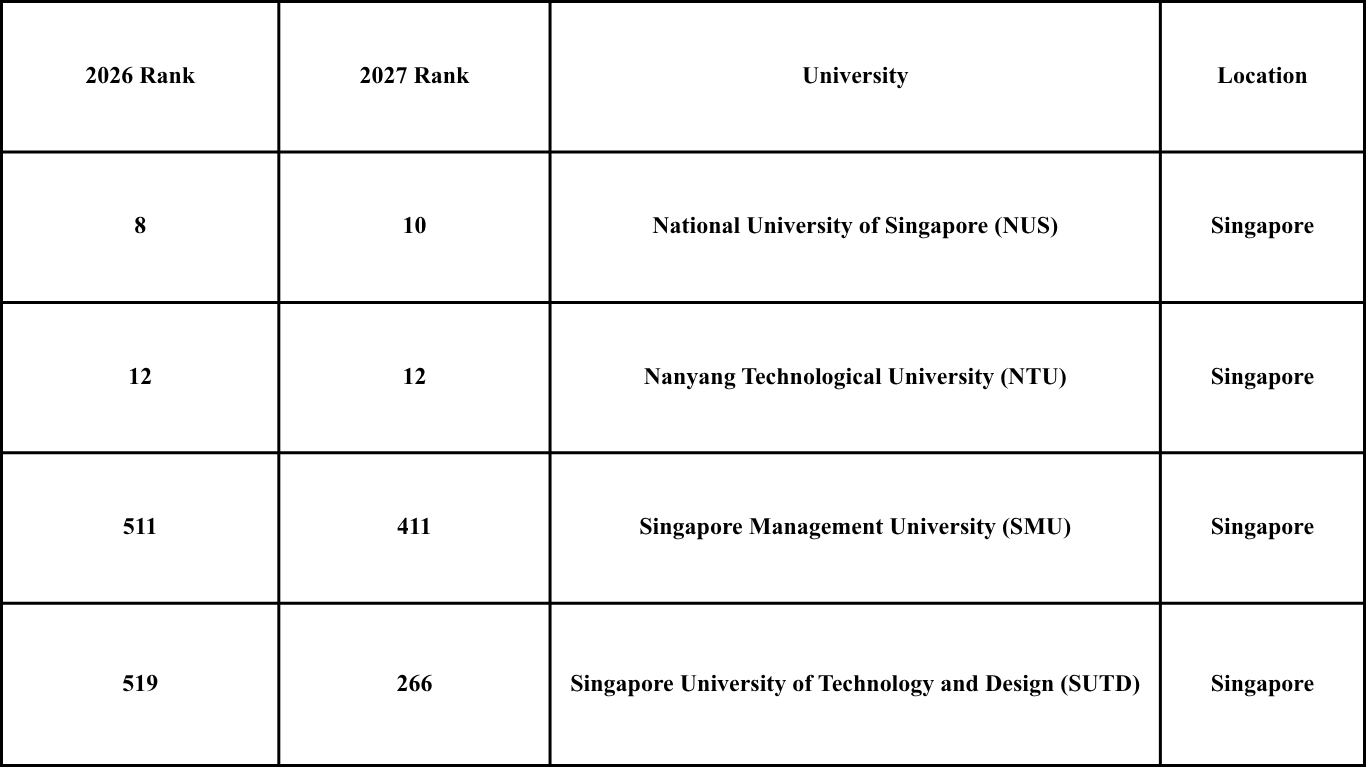
Source: Ranking data derived from the QS World University Rankings 2027 and reported by The Straits Times. Table design and visualisation prepared by Hanbridge Institute.
Despite NUS moving from 8th to 10th place, Singapore remains one of only a handful of countries with universities consistently represented near the top of global rankings. NUS continues to be Asia’s highest-ranked university, while NTU remains among the world’s leading institutions.
But what matters even more is what happens long before a student fills in a university application.
The country continues to be recognised for:
- Strong academic standards
- Rigorous curriculum design
- High employer confidence in graduates
- Research excellence
- Internationally recognised qualifications
- Strong links between education and industry
Recent rankings also highlighted Singapore’s strong performance in employer reputation and research impact, reinforcing the value of a Singapore education for students planning their future careers.
For students considering their long-term educational journey, these strengths provide confidence that Singapore remains one of the world’s leading education hubs.
In practical terms, this gives parents confidence that the years their child spends studying in Singapore are building towards qualifications that are respected by universities and employers worldwide.
The Journey Starts Long Before University
When discussing university rankings, it is easy to focus only on undergraduate admissions.
However, gaining entry into top universities often begins many years earlier.
Students hoping to pursue higher education in Singapore typically progress through a structured academic pathway that starts in primary and secondary education. For international students, one of the key entry routes into Singapore’s education system is through the Admissions Exercise for International Students (AEIS).
The AEIS examination allows international students to apply for placement into Singapore government schools, providing an opportunity to experience the same high-quality education system that has contributed to Singapore’s global academic reputation.
For many families, this pathway offers several advantages:
- Early integration into Singapore’s education system
- Exposure to internationally respected academic standards
- Development of strong English and Mathematics foundations
- Greater familiarity with local curriculum requirements
- Long-term progression opportunities into secondary school, polytechnic, junior college, and university pathways
For many international families, deciding to sit for the AEIS is not just an academic choice. It often involves relocating, financial commitment, and the hope that their child will be able to adapt to a new culture and language environment. That’s why preparation and support are so important.
Why Preparation Matters
Anyone who has seen a Singapore school timetable knows how rigorous the system can be.
Students entering through AEIS often need strong foundations in English and Mathematics to adapt successfully to local classroom expectations and assessment standards.
Preparing early allows students to build not only subject knowledge but also confidence, study habits, and familiarity with Singapore’s learning environment.
As competition for school placements continues to grow, structured preparation can help students better navigate the transition into Singapore schools and position themselves for future academic success.
How Hanbridge Institute Supports Students
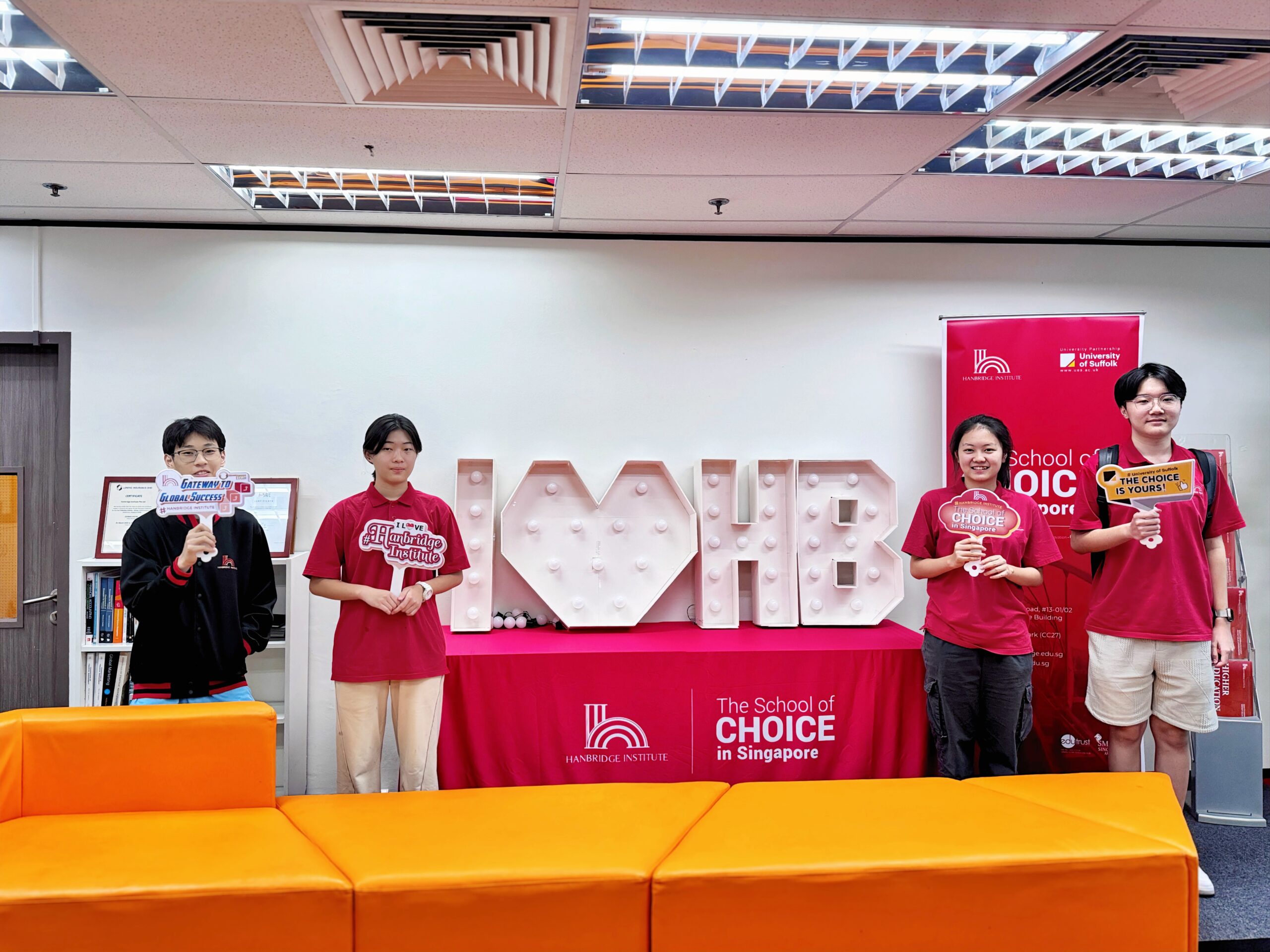
At Hanbridge Institute, we have supported international students preparing for entry into Singapore schools through our AEIS and S-AEIS preparatory programmes.
Beyond covering the AEIS syllabus in English and Mathematics, our programmes focus on:
- Building exam-ready language and problem-solving skills
- Helping students adjust to Singapore’s classroom pace and expectations
- Coaching them in study habits that local students typically develop over several years
Many of our students arrive unsure if they can cope with the rigour of Singapore’s system. After several months of structured preparation, they not only perform better in the AEIS, but also feel more confident about participating in group work, presentations, and classroom discussions once they enter school.
Whether a student’s goal is to enter a Singapore government school, progress to tertiary education, or eventually pursue studies at globally recognised institutions such as NUS or NTU, building a strong academic foundation remains essential.
Final Thoughts
While university rankings may change from year to year, Singapore’s reputation for educational excellence remains firmly established.
The continued success of NUS and NTU reflects the strength of a broader education ecosystem that begins long before university admission.
If you’re planning your child’s education, understanding these pathways early can save a lot of stress later on. The road to higher education often starts with a strong foundation, and for many international students, that journey begins with gaining access to Singapore’s school system through AEIS.
To learn more about our AEIS and S-AEIS preparatory programmes, you can contact us or visit our campus to speak with our representatives.
Sources
The Straits Times. NUS falls to 10th place while NTU retains 12th spot in latest global university rankings.
https://www.straitstimes.com/singapore/parenting-education/nus-falls-to-10th-place-while-ntu-retains-12th-spot-in-latest-global-university-rankings
QS World University Rankings 2027. National University of Singapore Profile.
https://www.topuniversities.com/universities/national-university-singapore-nus
The Straits Times. NUS tops Asian universities in subject rankings again.
https://www.straitstimes.com/singapore/parenting-education/nus-tops-asian-universities-in-subject-rankings-again