


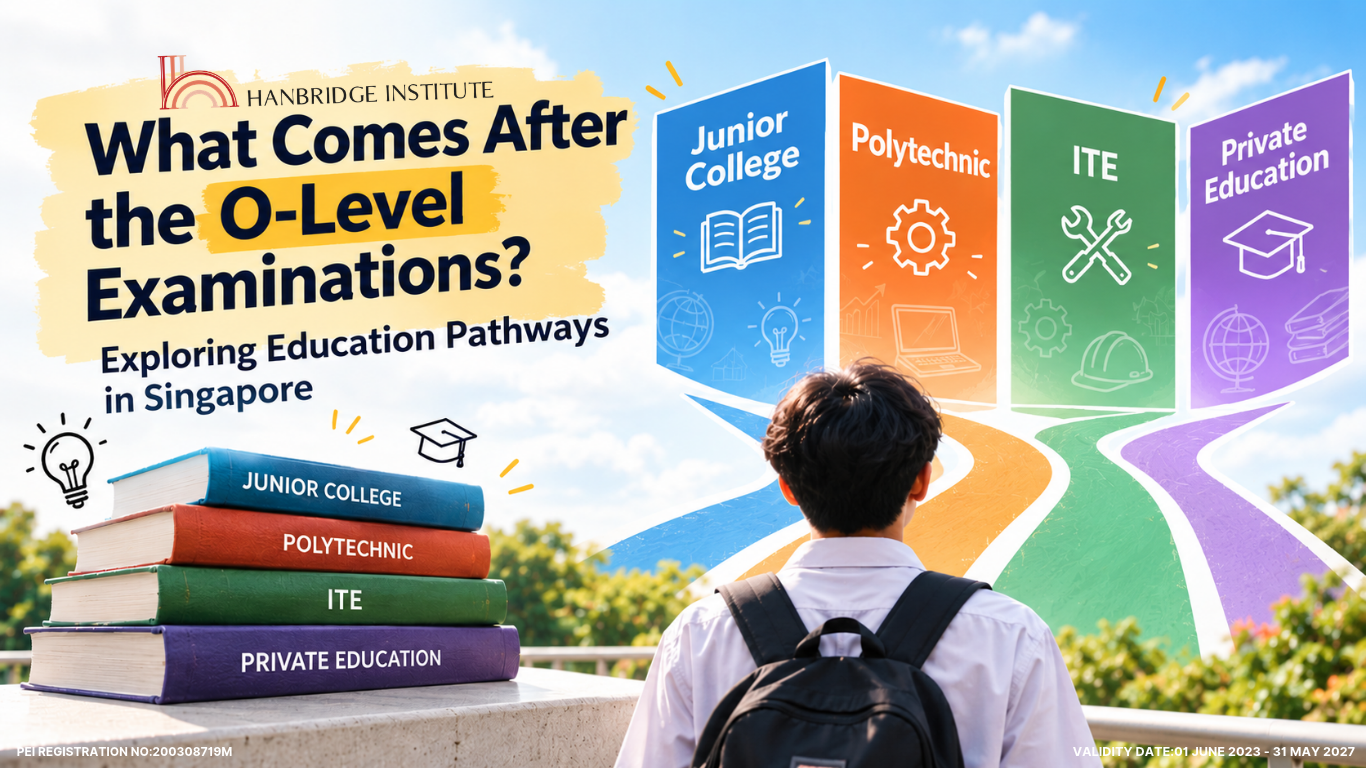
What Comes After the GCE O-Level Examinations? Exploring Education Pathways in Singapore
For students who have completed their 2026 Singapore-Cambridge GCE O-Level examinations, the period before results day offers an opportunity to consider their next stage of education.
Whether students hope to pursue university studies, develop practical skills, or explore a particular field, Singapore offers several post-secondary education pathways.
Understanding these options early can help students and parents make informed decisions when the results are released.
When Will the 2026 GCE O-Level Results Be Released?
According to the Singapore Examinations and Assessment Board (SEAB), the 2026 GCE O-Level examination results are expected to be released between 13 and 15 January 2027.
This is a tentative window, with the exact release date to be confirmed by SEAB.
Students can refer to the SEAB Important Dates for Candidates page for official announcements.
After receiving their results, eligible students can consider applying to Junior Colleges, polytechnics or the Institute of Technical Education (ITE), alongside other educational options.
1. Junior Colleges: Preparing for University Education
Junior Colleges (JCs) provide a predominantly academic, pre-university education for students who wish to continue towards university studies.
Most JC programmes take two years, culminating in the Singapore-Cambridge GCE A-Level examinations. Students generally study subjects from the sciences, mathematics, humanities and languages, depending on their chosen subject combination.
Singapore has several Junior Colleges, including:
- Raffles Institution
- Hwa Chong Institution
- Victoria Junior College
- National Junior College
- Eunoia Junior College
- Anglo-Chinese Junior College
- Nanyang Junior College
- Temasek Junior College
- St. Andrew’s Junior College
Students can also explore Millennia Institute, which offers a three-year A-Level pathway, or schools offering the International Baccalaureate Diploma Programme.
Who Might Consider Junior College?
This pathway may appeal to students who enjoy academic subjects, are comfortable with examination-based learning, and wish to keep a broad range of university degree options open.
Admission depends on academic results, subject requirements, and the eligibility criteria of individual institutions.
2. Polytechnics: Practical Learning and Industry Experience
Polytechnics offer a more applied approach to post-secondary education, combining classroom learning with projects, practical assignments and opportunities for industry exposure.
Most full-time diploma programmes take three years to complete.
Students can choose from disciplines such as business, engineering, information technology, design, media and health sciences.
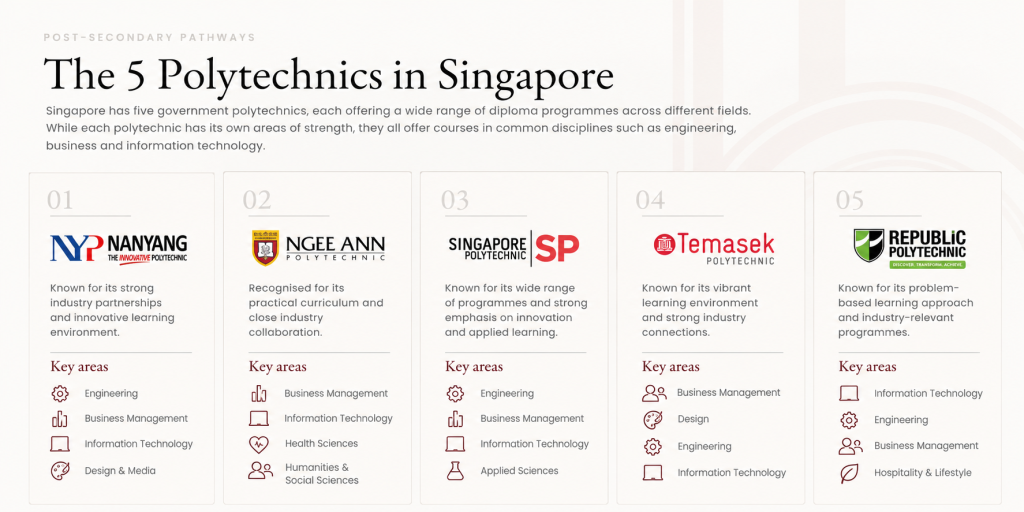
The Five Polytechnics in Singapore
Singapore Polytechnic (SP) – Offers diploma programmes across fields including engineering, business, computing and applied sciences.
Ngee Ann Polytechnic (NP) – Provides programmes in areas such as business, media, engineering, information technology and health sciences.
Temasek Polytechnic (TP) – Offers courses spanning business, design, engineering, applied sciences and information technology.
Nanyang Polytechnic (NYP) – Provides programmes in business, engineering, information technology, design and health-related disciplines.
Republic Polytechnic (RP) – Offers applied diploma education across fields including business, hospitality, engineering, technology and sports-related studies.
Who Might Consider Polytechnic?
Polytechnic education may suit students who have identified a field of interest and prefer learning through practical projects and applied coursework.
After completing their diplomas, graduates may pursue employment or apply for further education at universities, subject to admission requirements.
While each polytechnic has its own areas of strength, specialised programmes and institutional highlights, all five offer courses across several common disciplines, including engineering, business and information technology. Students are therefore encouraged to explore the individual courses, curriculum and learning opportunities offered by each polytechnic rather than choosing solely based on its reputation in a particular field.
3. Institute of Technical Education: Developing Practical and Technical Skills
The Institute of Technical Education (ITE) focuses on career-oriented education and technical skills development.
Students receive hands-on training in areas such as engineering, hospitality, business services, healthcare, design, and information technology.
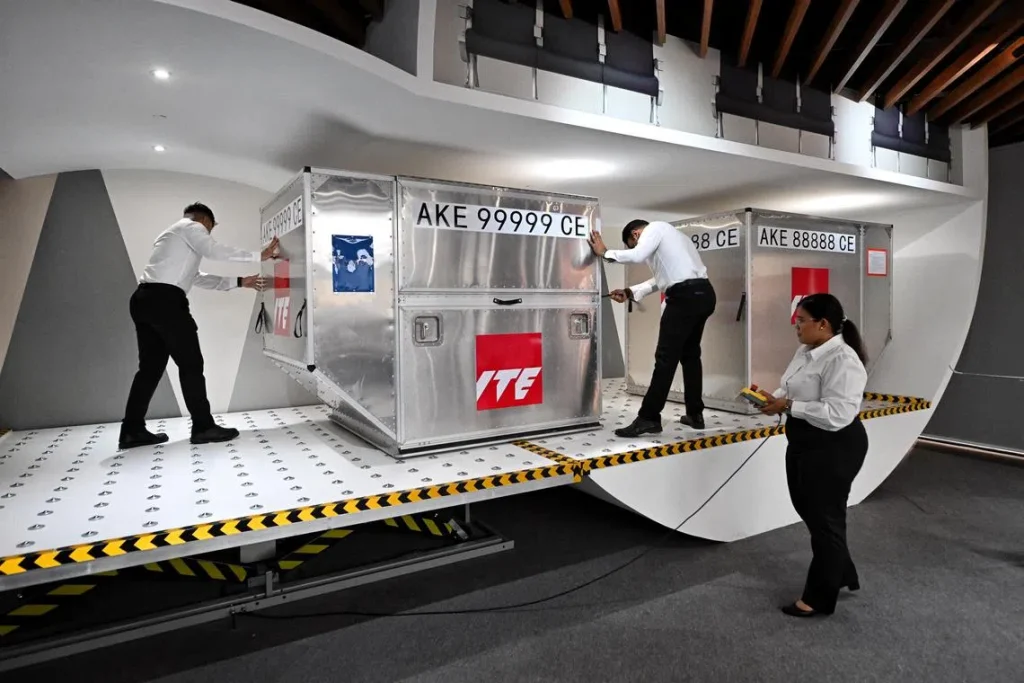
The Three ITE Colleges
ITE College Central – Located in Ang Mo Kio.
ITE College East – Located in Simei.
ITE College West – Located in Choa Chu Kang.
ITE offers Higher Nitec programmes with different durations and entry requirements. Eligible O-Level graduates may enter relevant two-year Higher Nitec programmes, while other programmes may follow a three-year structure.
Who Might Consider ITE?
ITE may be suitable for students who enjoy practical learning, technical subjects, and developing skills for specific industries.
Depending on their qualifications and academic performance, ITE graduates may subsequently pursue polytechnic diplomas or other further education opportunities.
4. Private Education: Exploring Alternative Academic Pathways
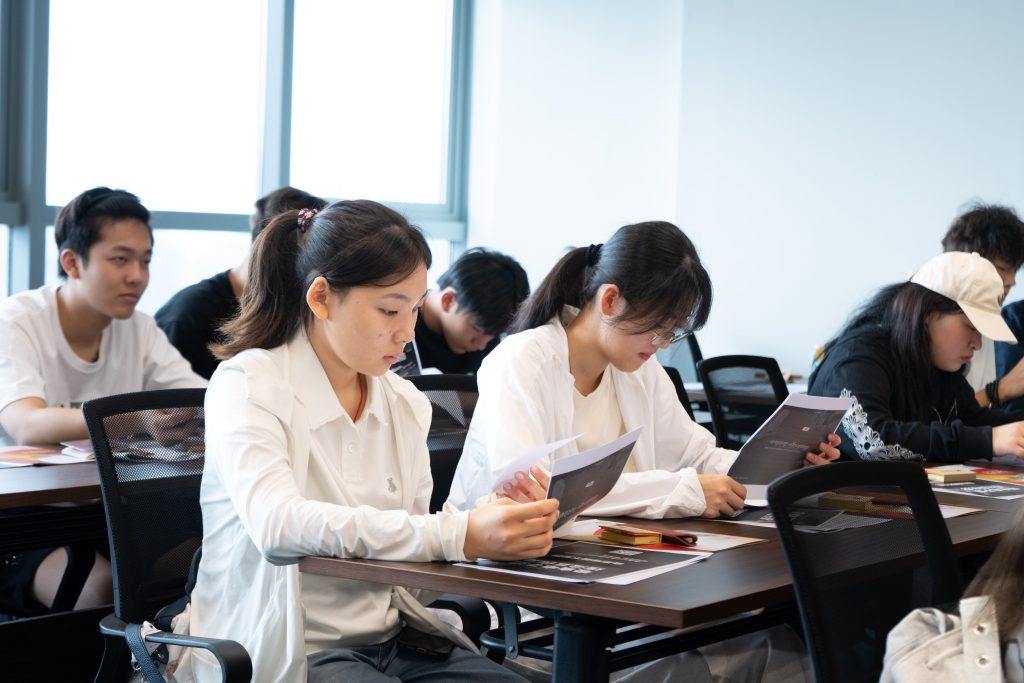
Beyond Singapore’s public post-secondary institutions, students can also consider programmes offered by private education institutions.
These may include foundation certificates, diplomas and degree programmes, depending on the institution and the student’s qualifications.
Foundation programmes are designed to help students develop the academic knowledge and skills needed for further studies.
For students interested in business and management, this can provide an opportunity to build a foundation before progressing to higher qualifications.
Exploring Business Education at Hanbridge Institute
At Hanbridge Institute, students can explore the Foundation Certificate in Business Innovations, a six-month programme introducing fundamental business concepts.
The curriculum covers areas such as business communication, accounting, statistics, business environments and social responsibility.
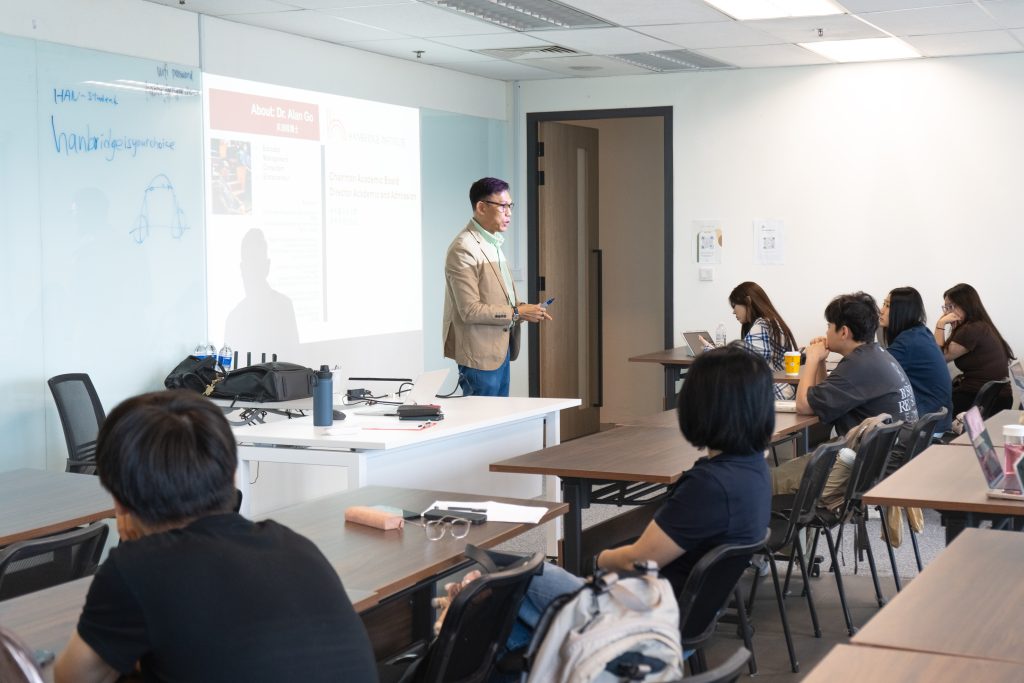
For local applicants, the published academic entry requirement includes at least two GCE O-Level credits at Grade C6, alongside English language and minimum-age requirements.
Students who successfully complete the foundation programme may be eligible to progress to Hanbridge Institute’s Diploma in Business Management, subject to the applicable admission requirements.
Hanbridge Institute also offers higher education programmes, including the BA (Hons) Business Management awarded by the University of Suffolk, UK.
Students interested in this pathway should consult the academic team to understand programme requirements, progression arrangements and the qualifications available at each stage.
Explore the Foundation Certificate in Business Innovations
How Should Students Choose Their Next Education Pathway?
Choosing a post-secondary pathway involves more than examining O-Level grades.
Students and parents may wish to consider:
- Academic interests: Which subjects or fields does the student enjoy?
- Learning preferences: Does the student prefer academic study, applied projects, or practical training?
- Future aspirations: Is the goal to pursue a university degree, develop technical expertise, or prepare for employment?
- Entry requirements: Which institutions and programmes are accessible based on the student’s qualifications?
- Progression opportunities: What further education options may become available after completing the programme?
It is also important to review application deadlines, course requirements and eligibility conditions, particularly for international students.
The Ministry of Education’s Joint Admissions Exercise website provides information on applications to participating public post-secondary institutions.
Looking Ahead: Singapore’s Education Pathways Continue to Evolve
The 2026 cohort will be among the final students taking the GCE O-Level examinations under the existing national examination structure.
From 2027, Singapore will introduce the Singapore-Cambridge Secondary Education Certificate (SEC), replacing the separate GCE N(T), N(A) and O-Level examinations.
Students receiving their 2026 O-Level results in January 2027 will still receive qualifications under the existing GCE O-Level system.
For these students, the immediate priority is understanding their available post-secondary options and making a decision that supports their interests and future aspirations.
Conclusion
Completing the GCE O-Level examinations marks an important milestone in a student’s educational journey.
From the academic environment of Junior Colleges to the applied learning opportunities offered by polytechnics and ITE, each pathway provides different experiences and progression opportunities.
Private education institutions also offer programmes that students may consider according to their qualifications and educational goals.

At Hanbridge Institute, we encourage students and parents to explore these options carefully and seek guidance when planning their next steps.
Interested in exploring a business education pathway? Visit our programmes page to learn more about the courses available at Hanbridge Institute.