


Are the Stakes Higher for Young People Today? And How Can We Prepare Them?
Every generation faces its own challenges.
But are young people today entering adulthood under a different kind of pressure?
The transition from education to adulthood has never been entirely straightforward. Yet for today’s young people, decisions around education, careers and relationships are being made amid changing workplaces, economic uncertainty and increasingly complex expectations.
This question was explored by Michael Han in his Straits Times commentary, “How to bridge the generation gap”, where he reflects on his own son’s approaching transition into the workforce and the uncertainties young people may experience when thinking about their future.
One idea particularly stands out: what parents see as an opportunity, their children may see as something they are not yet ready for.
That raises an important question for both parents and educational institutions:
Are we preparing young people for the challenges they are actually facing?
The Path From Education to Employment Is Not Always Straightforward
For many students, preparing for a career begins long before graduation.
There are internships to consider, skills to develop, networks to build, interviews to prepare for, and decisions to make about which opportunities are worth pursuing.
Recent developments in Singapore illustrate some of this uncertainty.
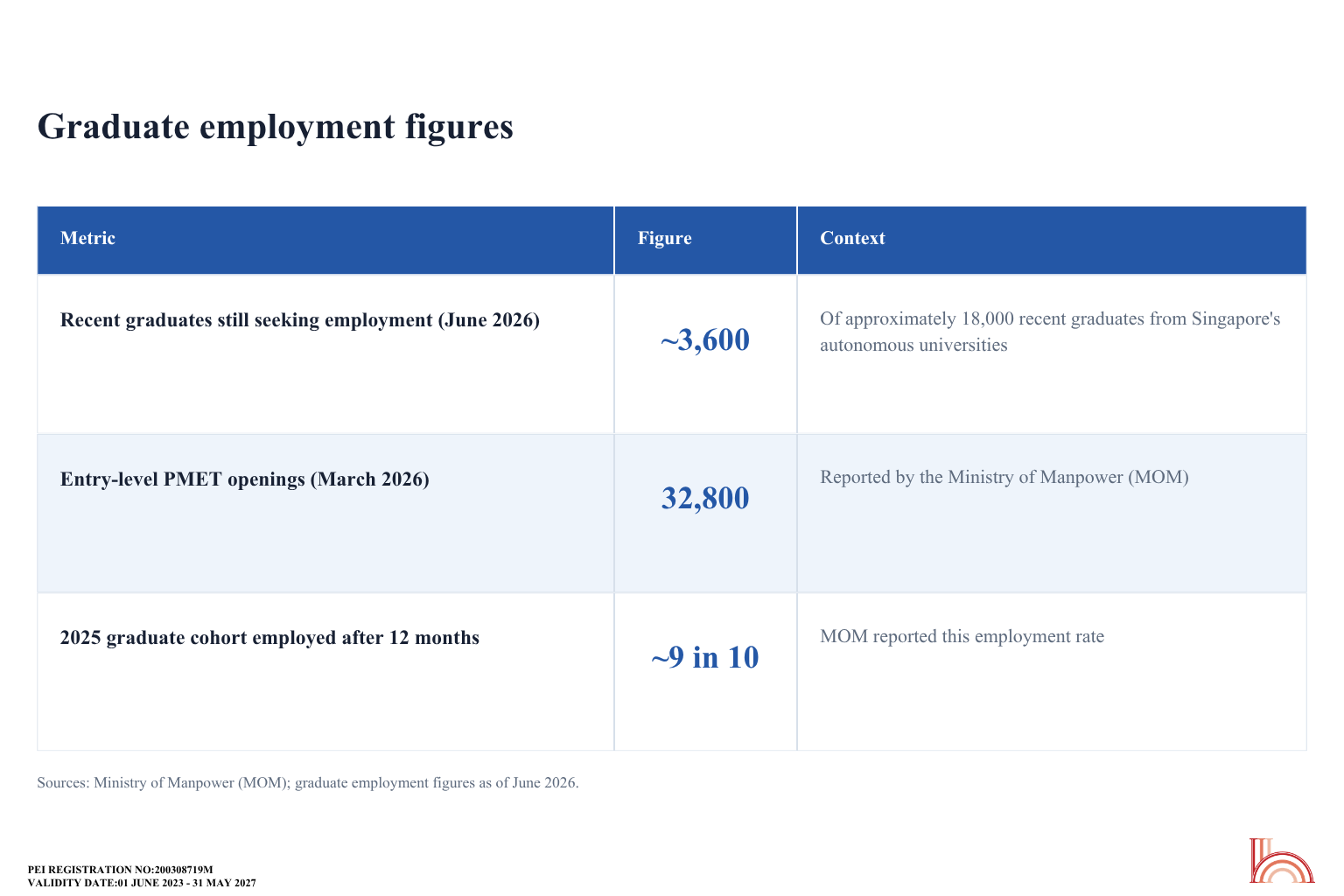
As of June 2026, around 3,600 of approximately 18,000 recent graduates from Singapore’s autonomous universities were still seeking employment. At the same time, the Ministry of Manpower (MOM) reported 32,800 entry-level PMET openings in March 2026 and noted that around nine in 10 graduates from the 2025 cohort had found employment 12 months after graduation.
The picture, therefore, is more nuanced than simply saying there are not enough jobs.
Opportunities exist, but making the transition from education into employment can still be challenging for some graduates.
MOM recently identified limited work experience in a graduate’s target sector, weak interview skills, and slower hiring in certain industries among the challenges unemployed and underemployed graduates may encounter.
For a student approaching graduation, this can create another question:
“I have studied for this opportunity, but am I actually ready for it?”
The Pressure to Be “Ready” Starts Earlier
Internships are often seen as one way for students to gain exposure and practical experience before entering the workforce.
But securing these opportunities can itself be challenging.
In June 2026, The Straits Times reported on young Singaporeans developing their own internship and entry-level job trackers to make opportunities easier to find. One 18-year-old interviewed by the newspaper said she had sent more than 400 cold e-mails before securing a law internship, and pointed to the difficulty some students can face when they lack established connections.
One individual experience does not represent every student or every industry. But it illustrates a broader concern.
Students can find themselves in an uncomfortable position: they want experience to become better prepared, yet they may already feel pressure to demonstrate experience before receiving the opportunity to gain it.
This is what we might call a readiness gap.
A student may have the academic knowledge required for the next stage, but still question whether they can communicate confidently, work with unfamiliar people, solve problems independently, or perform in a professional environment.
That uncertainty can make an opportunity look very different depending on which generation is looking at it.
What Parents See as an Opportunity, Young People May See Differently
A parent might see an internship opening and think:
“Just apply. It will be good experience.”
Their child might see the same opportunity and wonder:
“What if I’m not ready?”
That difference in perspective is important.
The Straits Times commentary argues that narrowing the generation gap requires greater patience, listening, and an effort to understand the challenges young people see from their perspective.
Parents do not necessarily need to understand every emerging career, technology, or recruitment trend to play a meaningful role.
Sometimes support can begin with a few simple questions:
What are you worried about?
What makes you feel unprepared?
What would help you feel more confident about trying?
The answer may not immediately solve the problem. But giving young people the space to express uncertainty without judgement can make it easier for them to take their next step.
Schools Have a Role Beyond Academic Preparation
Parents are only one part of this equation.
Educational institutions also need to consider whether students are being given sufficient opportunities to practise what may eventually be expected of them.
Academic knowledge remains fundamental. But students may also need opportunities to communicate ideas, conduct research, collaborate with others, respond to feedback, solve unfamiliar problems and apply what they have learnt.
Importantly, these capabilities are difficult to develop simply by telling students that they need to be more confident.
Confidence needs somewhere to come from.
One approach is to create opportunities for students to practise before the stakes become real.
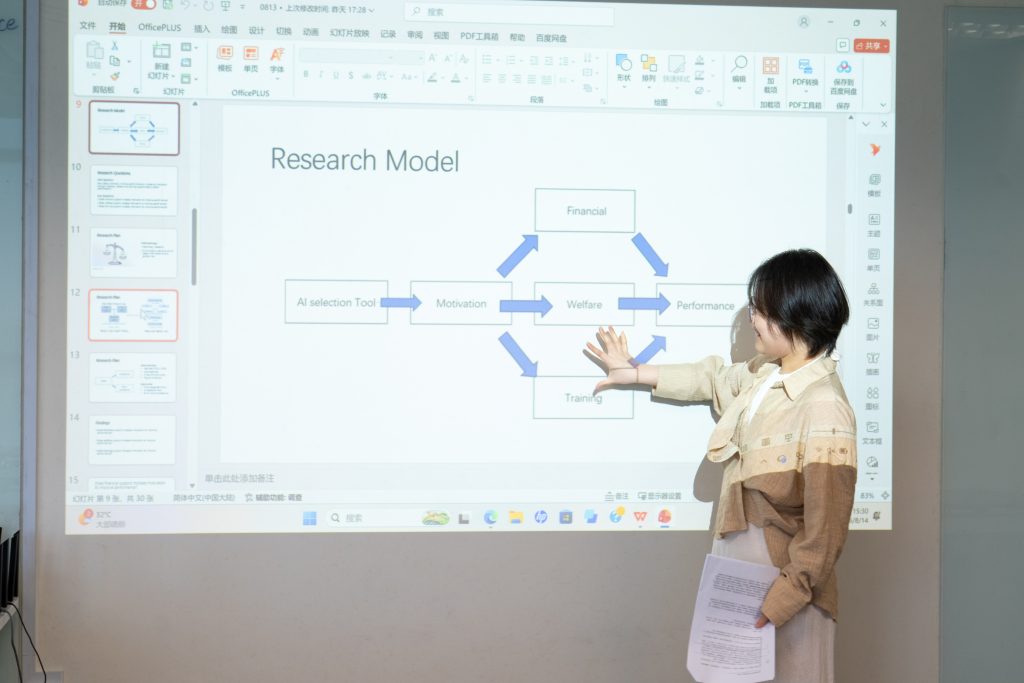
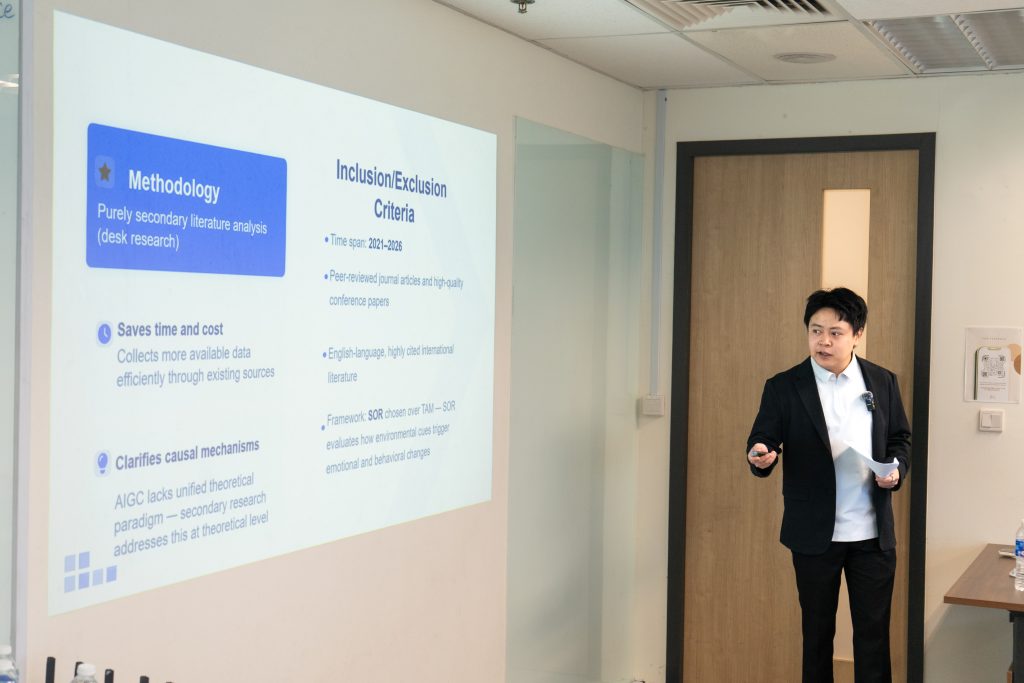
At Hanbridge Institute, for example, students in the BA (Hons) Business Management, awarded by the University of Suffolk, UK, recently presented their individual Extended Projects. Their projects required them to conduct independent research, analyse information, and communicate their findings through a professional presentation.
The objective of experiences like these extends beyond completing an assessment. They give students opportunities to practise communicating their thinking, answering questions, and presenting their work in front of others.
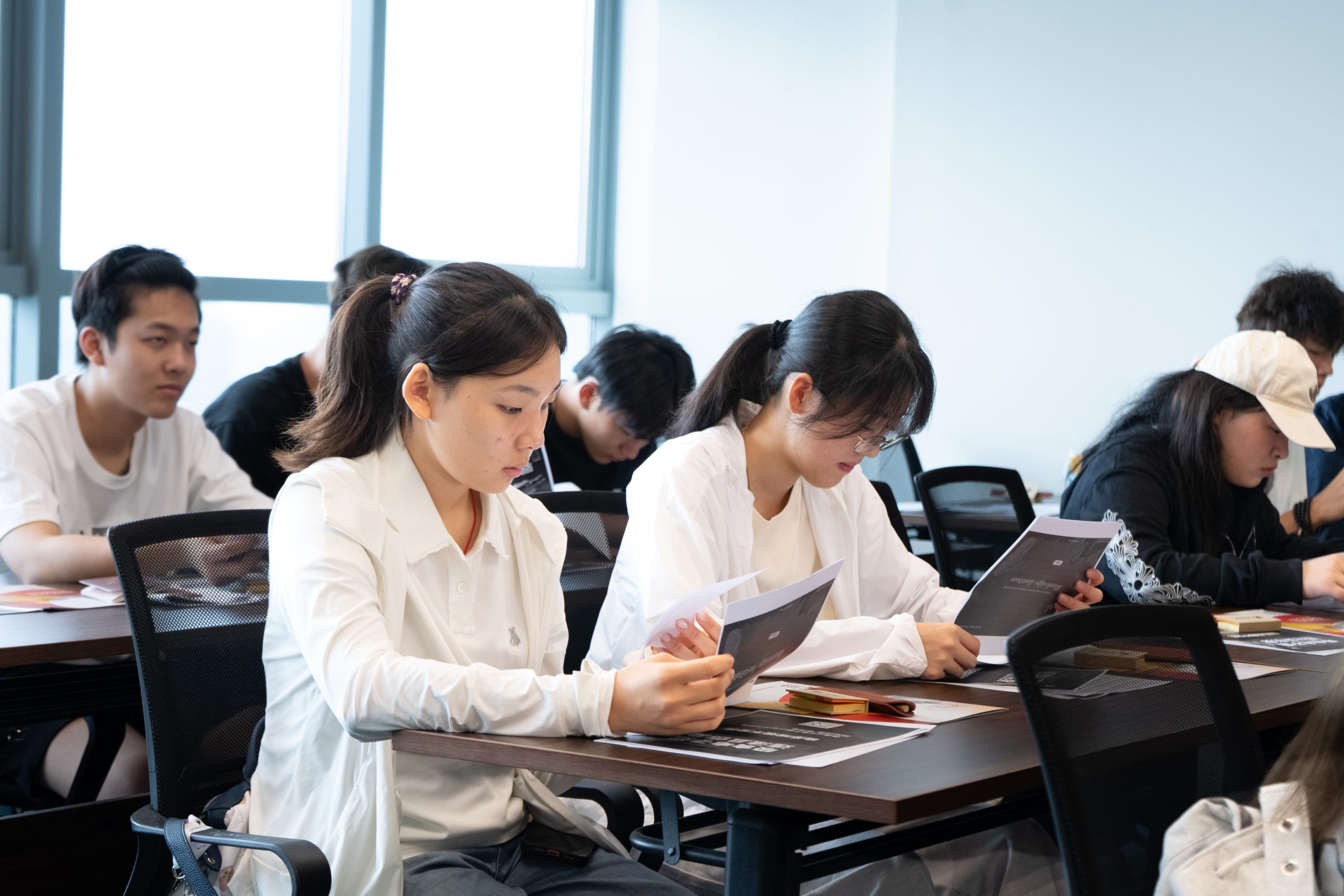
Guest sharing sessions, industry engagement, and opportunities to interact with people beyond the classroom can similarly expose students to perspectives and situations they may encounter later.
These experiences cannot replicate every challenge of an internship or workplace.
But they can make the first encounter with those challenges a little less unfamiliar.
Confidence Is Built Before the Opportunity Arrives
Singapore is already placing emphasis on work-based learning and industry experience.
MOM says it works with Institutes of Higher Learning and industry on work-based learning programmes to help students and graduates gain meaningful experience. The Government’s GRaduate Industry Traineeships (GRIT) programme was similarly introduced to help graduates facing difficulties in their initial job search gain industry-relevant skills and experience.
This points towards an important principle for education.
Preparing students for the future cannot begin only after they graduate.
Students need opportunities to try, make mistakes, receive feedback, and try again while they are still learning.
A presentation that does not go perfectly can become an opportunity to improve communication.
A challenging project can teach someone how to work through uncertainty.
Constructive feedback can help a student recognise what needs improvement without interpreting a mistake as failure.
Over time, these experiences can help students develop something that cannot simply be handed to them at graduation: confidence in their ability to learn and adapt.
Preparing Young People Does Not Mean Having All the Answers
Parents cannot remove every uncertainty their children will face.
Schools cannot predict exactly what industries or workplaces will look like several years from now.
And educators cannot prepare students for every interview, internship, career decision or setback they may encounter.
Perhaps that is not the goal.
Parents can provide reassurance that it is okay to still be figuring things out.
Educators can provide opportunities for students to practise, apply their knowledge, receive feedback, and grow.
And students can gradually learn that being prepared does not mean having every answer before taking the first step.
The generation gap discussed today may therefore be about more than age.
There can also be a gap between what adults see as an opportunity and whether a young person feels ready to take it.
Closing that gap requires listening, guidance, and preparation from the people surrounding them.
Because preparing young people for an uncertain future does not mean giving them all the answers.
It means helping them develop the confidence to find their own.
Sources & References
- The Straits Times. How to bridge the generation gap. Published 13 September 2026.
https://www.straitstimes.com/singapore/parenting-education/how-to-bridge-the-generation-gap - Ministry of Manpower, Singapore. Written Answer to PQ on Fresh Graduate Employment. Published 4 August 2026.
https://www.mom.gov.sg/newsroom/parliament-questions-and-replies/2026/0804-written-answer-to-pq-on-fresh-graduate-employment - Ministry of Manpower, Singapore. Written Answer to PQ on Entry Level Job Vacancies. Published 8 September 2026.
https://www.mom.gov.sg/newsroom/parliament-questions-and-replies/2026/0908-written-answer-to-pq-on-entry-level-job-vacancies - Ministry of Manpower, Singapore. Written Answer to PQ on Fresh Graduate Employment Support. Published 10 September 2026.
https://www.mom.gov.sg/newsroom/parliament-questions-and-replies/2026/0910-written-answer-to-pq-on-fresh-graduate-employment-support - Ministry of Manpower, Singapore. Job Vacancies Report 2025. Published 20 March 2026.
https://www.mom.gov.sg/newsroom/press-releases/2026/0320-job-vacancies-report-2025 - The Straits Times. Young Singaporeans build internship, entry-level job trackers to close opportunity gap. Published 9 June 2026.
https://www.straitstimes.com/business/young-singaporeans-build-internship-entry-level-job-trackers-to-close-opportunity-gap