


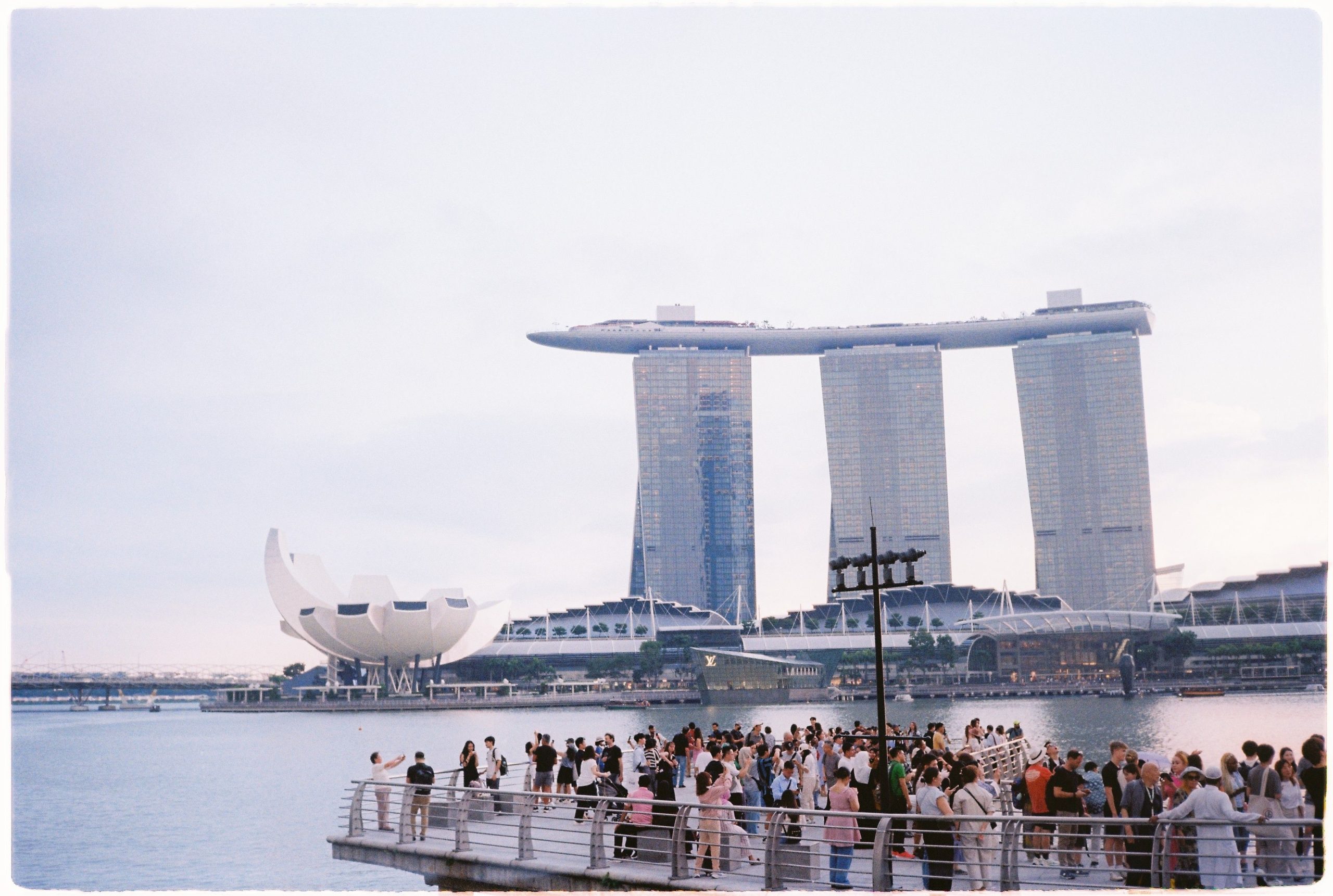
Singapore Is Growing: What Does This Mean for Those Who Want to Study, Work and Build a Future Here?
Singapore’s population has reached a new high.
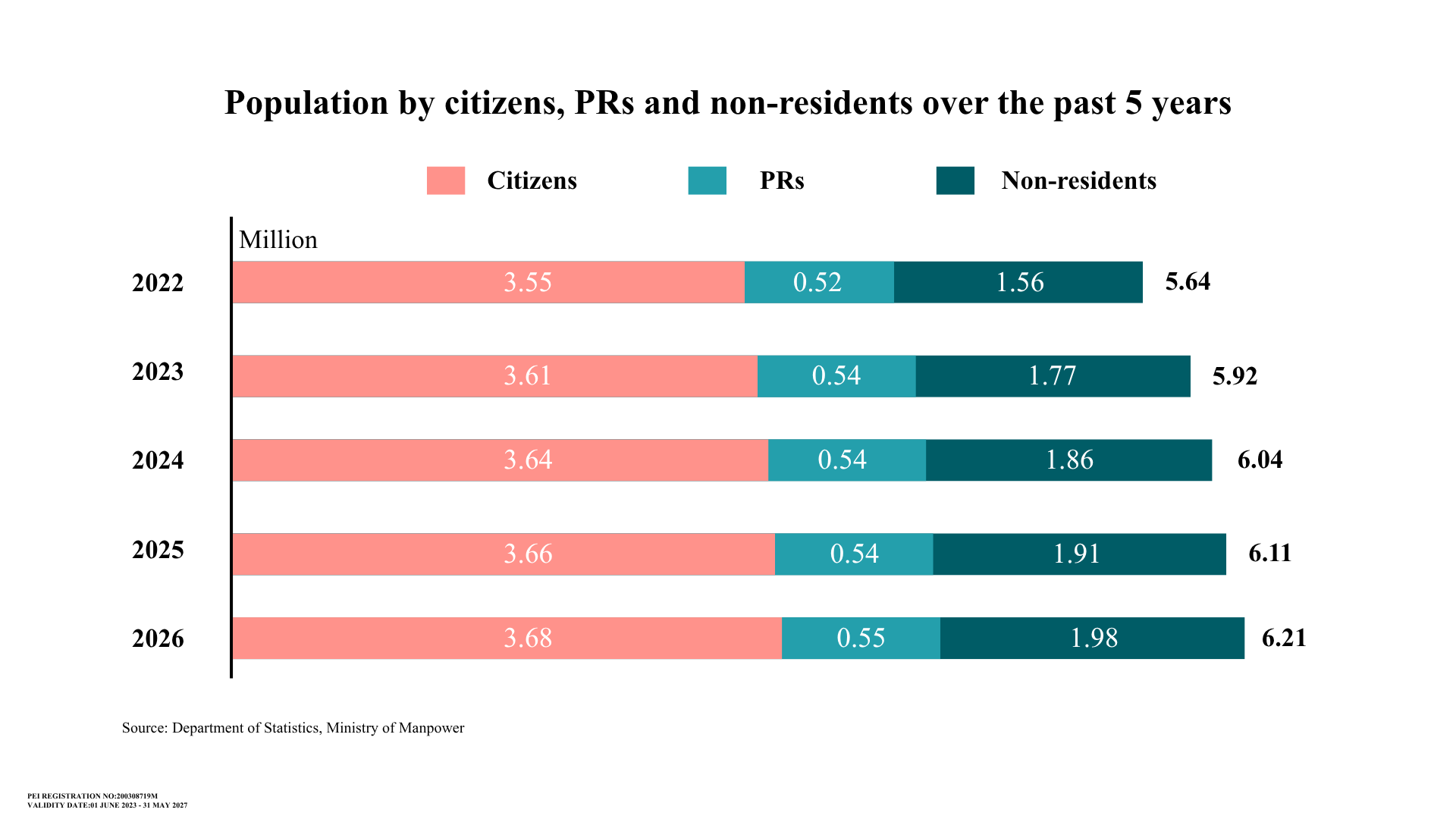
As at June 2026, Singapore’s total population stood at 6.21 million, up 1.6% from 6.11 million a year earlier. Of this, 4.23 million were residents while 1.98 million were non-residents.
Behind these numbers is a bigger story about Singapore’s economy, workforce and changing population.
For international students considering where to pursue their education, it also raises an interesting question:
What role can education play for those who hope to build their careers and lives in Singapore?
Why Is Singapore’s Population Growing?
The latest figures need some context.
The 97,300 increase in Singapore’s population was primarily driven by growth in the non-resident population. According to Population in Brief 2026, the increase came mainly from Work Permit holders, particularly those supporting major construction projects including Changi Airport Terminal 5, the Marina Bay Sands expansion, housing supply and transport infrastructure.
Singapore’s non-resident population increased 3.7% from 1.91 million in June 2025 to 1.98 million in June 2026.
This does not mean that employment opportunities are increasing equally across every profession.
What it does demonstrate is that foreign manpower continues to play an important role in Singapore’s economy.
Ministry of Manpower figures show that Singapore’s total foreign workforce reached approximately 1.66 million in June 2026, compared with 1.64 million in December 2025.
That workforce spans very different levels of employment, from Work Permit holders to S Pass and Employment Pass holders.
Singapore Is Also Facing a Demographic Challenge
There is another side to Singapore’s population story.
Singapore is ageing.
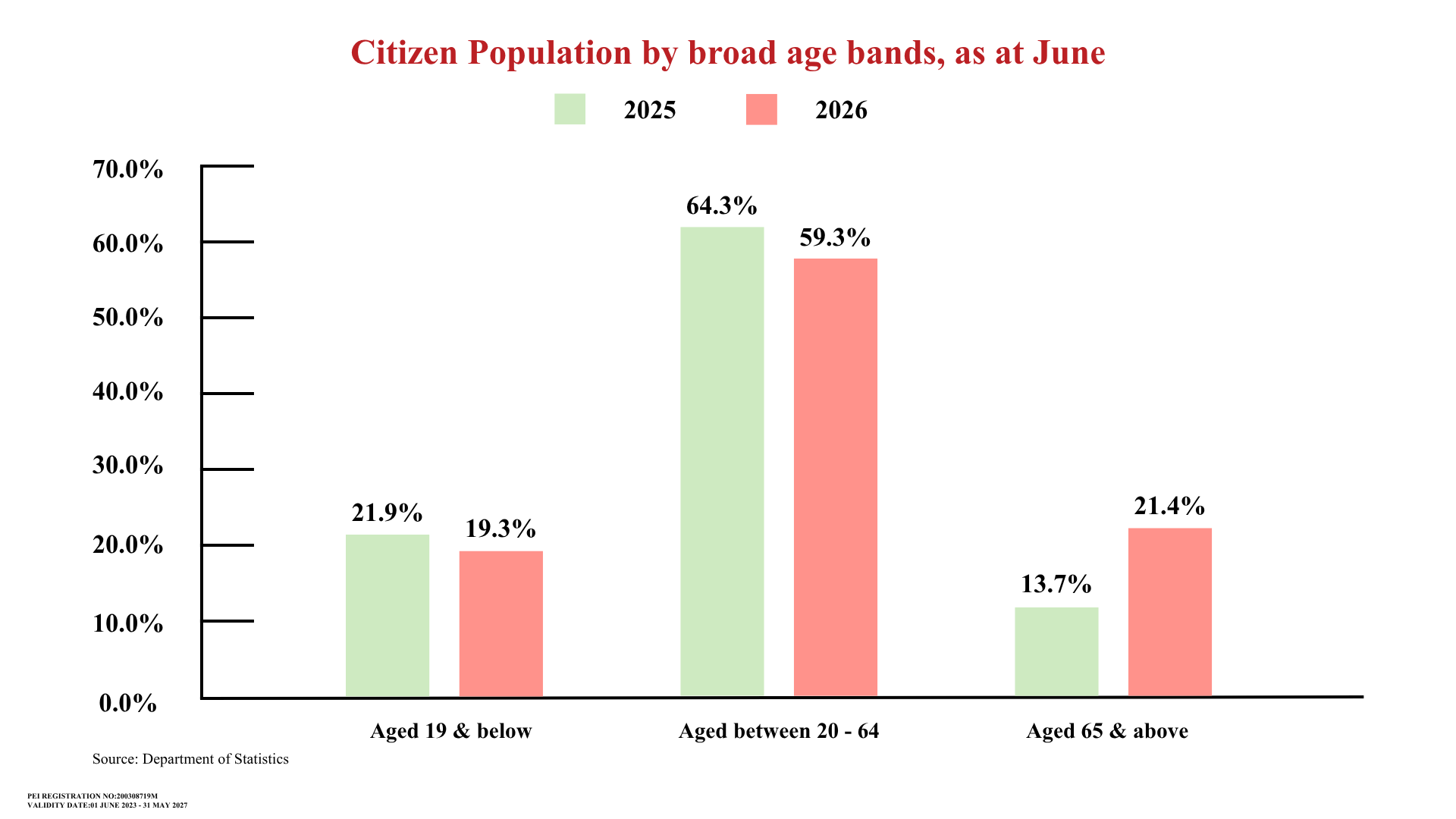
In June 2026, 21.4% of Singapore citizens were aged 65 and above, compared with 13.7% a decade earlier.
At the same time, Singapore recorded 26,071 citizen births in 2025, down 10.8% from 2024. The resident total fertility rate also fell from 0.97 in 2024 to 0.87 in 2025.
These demographic changes matter because Singapore needs to think not only about the size of its population today, but also about the workforce and society it will need tomorrow.
Singapore’s Population in Brief 2026 states that immigration helps moderate the effects of ageing and low birth rates and prevents the citizen population from shrinking too quickly over the longer term.
This does not mean that moving to Singapore automatically creates a pathway towards permanent residency or citizenship. Both are carefully managed and subject to Singapore’s prevailing requirements.
But it does demonstrate something important: people who come to Singapore to work, study and live continue to form part of the country’s wider economic and social landscape.
From Coming to Singapore to Building a Life Here
For an international student, moving to Singapore can begin with education.
But education can represent more than earning a qualification.
Studying in another country means learning how its workplaces, communities and institutions operate. It means communicating with people from different backgrounds, developing independence and gaining experience in a different environment.
Population in Brief 2026 notes that many of Singapore’s new citizens and Permanent Residents had previously studied, worked or lived in Singapore for some time.
Again, studying here should never be presented as a guaranteed route to employment, Permanent Residency or citizenship.
Instead, it highlights how education can be one of the ways an individual begins developing familiarity with Singapore and preparing for opportunities that may become available later.
Where Does Education Fit Into Singapore’s Workforce?
A growing economy does not simply need more people. It needs people with the appropriate knowledge, capabilities and qualifications for different roles.
This is where higher education has an important role to play.
For students, the question should not simply be:
“Can I find a job in Singapore?”
A more useful question may be:
“What knowledge and capabilities do I need to participate in Singapore’s evolving economy?”
Different industries require different expertise, and Singapore’s requirements for foreign professionals are also structured through its work pass framework.
Education therefore cannot guarantee employment. What it can do is help individuals develop knowledge, technical capabilities, communication skills, and professional perspectives that can prepare them for their next stage.
Preparing for the Next Stage at Hanbridge Institute
At Hanbridge Institute, our higher education programmes span different stages and areas of study.
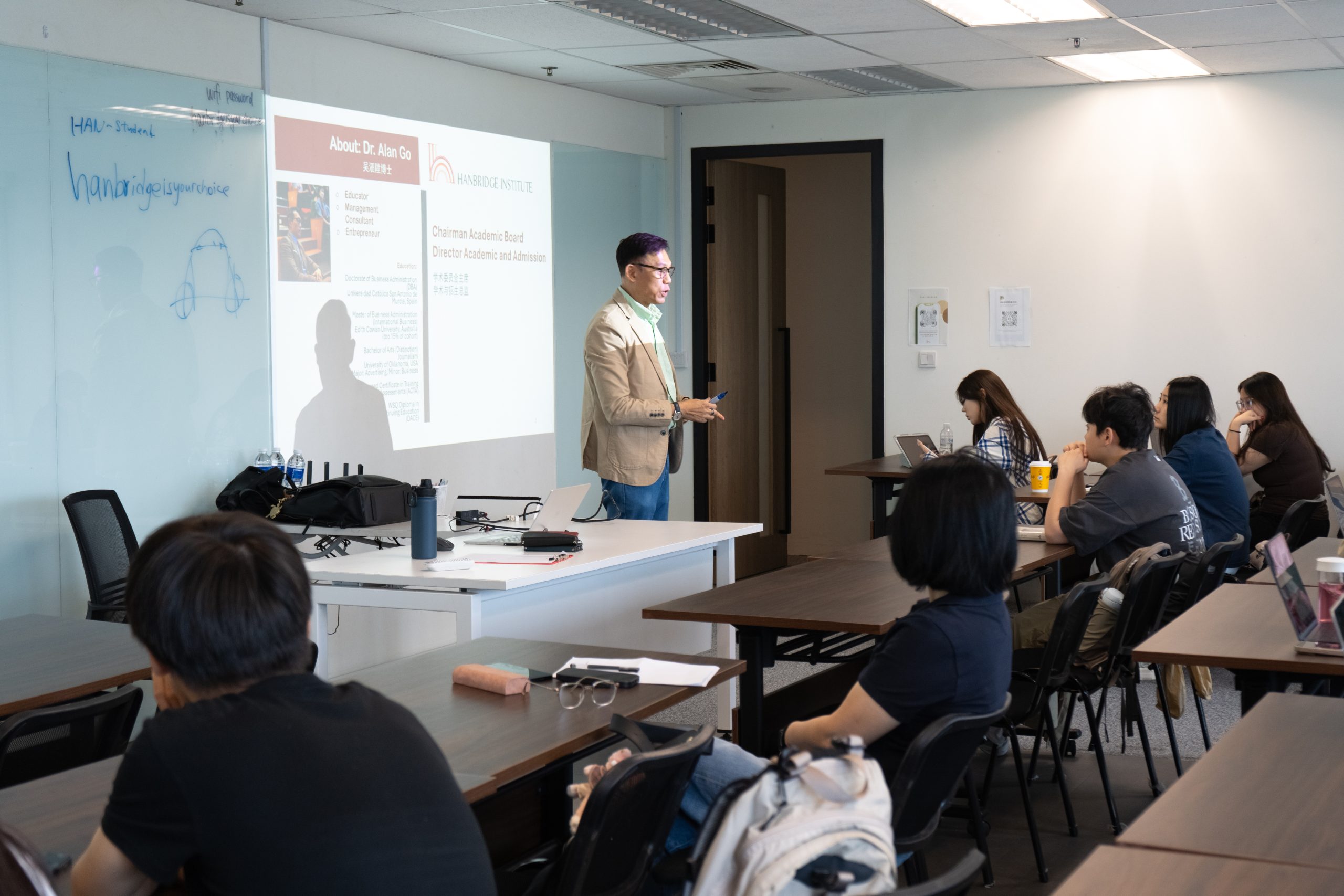
Students can develop foundations in business through our Diploma and Higher Diploma programmes, while our partnership with the University of Suffolk, UK provides opportunities to pursue undergraduate and postgraduate education in Singapore.
These include programmes in areas such as Business Management, International Business and Management, Data Science and Artificial Intelligence, Education and the MBA.
For international students, studying in Singapore also provides an opportunity to experience the country while developing academically.
The objective should not simply be to obtain a qualification and expect a job to follow.
It should be to ask:
What can I learn? What capabilities can I develop? And how can I better prepare myself for the opportunities that may come next?
A Growing Singapore Still Needs People Who Can Contribute
Singapore’s population reaching 6.21 million is more than a demographic milestone.
It reflects major infrastructure development, demand for foreign manpower, an ageing population and the continuing challenge of low birth rates.
It also shows why discussions about Singapore’s future cannot be separated from discussions about people, skills and education.
For those considering Singapore as a place to study and potentially work, the opportunity is not simply that the population is growing.
The bigger opportunity is to become equipped with the knowledge and capabilities to contribute meaningfully to an economy and society that continue to evolve.
Education can be an important place to start.
Sources & References
Singapore Department of Statistics. Population and Population Structure: Latest News & Data. September 2026. Available at:
https://www.singstat.gov.sg/find-data/explore-data-themes/population/population-and-population-structure/latest-news-data
National Population and Talent Division. Population in Brief 2026. Available at:
https://www.population.gov.sg/files/Population_in_Brief_2026.pdf
Ministry of Manpower, Singapore. Foreign Workforce Numbers. Data as at June 2026. Available at:
https://www.mom.gov.sg/foreign-workforce-numbers
The Straits Times. S’pore population rises 1.6% to 6.21 million, driven by construction workers for projects like T5. Published 25 September 2026. Available at:
https://www.straitstimes.com/singapore/spore-population-rises-1-6-to-6-21-million-driven-by-construction-workers-for-projects-like-t5