


The AI Dilemma: Are We Teaching Students What to Think or How to Think?
As Artificial Intelligence (AI) becomes increasingly integrated into education and the workplace, an important question continues to emerge:
If AI is used to complete an assignment or take-home interview task, can the individual still explain, defend, and critically evaluate the work produced?
For fresh graduates, this question often stems from their experiences in higher education. Generative AI tools are now capable of producing outlines, drafts, summaries, and research assistance within seconds, fundamentally changing how students approach assignments and problem-solving tasks.
When AI Becomes the Author
A recent Straits Times article explored the growing use of AI in take-home interview assignments.
Michelle Koh, Managing Director of executive search firm The Edge Partnership, highlighted a concern shared by many employers today: candidates who are unable to explain or critically analyse the work they submit may raise questions about their actual understanding of the subject matter.
This raises an important consideration for both students and educators. While AI can help accelerate productivity, overreliance on AI-generated outputs may limit opportunities for individuals to develop their own critical thinking, reasoning, and communication skills.
AI Is Not the Problem
At the same time, the article also presents a different perspective.
Kevin Chan, Chief Executive Officer of HR technology company Epitome Global, noted that AI is becoming a natural part of the modern workplace. The key issue is no longer whether someone uses AI, but how they use it.
The ability to identify inaccurate outputs, verify information, and combine AI-generated insights with one’s own judgement remains essential.
In fact, many employers may prefer candidates who are transparent about using AI while still demonstrating independent thinking, accountability, and ownership of their work.
What This Means for Higher Education
At Hanbridge Institute, we recognise that AI tools are becoming increasingly accessible to students.
Rather than focusing solely on restricting their use, we believe it is equally important to develop students’ critical thinking, communication, and analytical abilities.
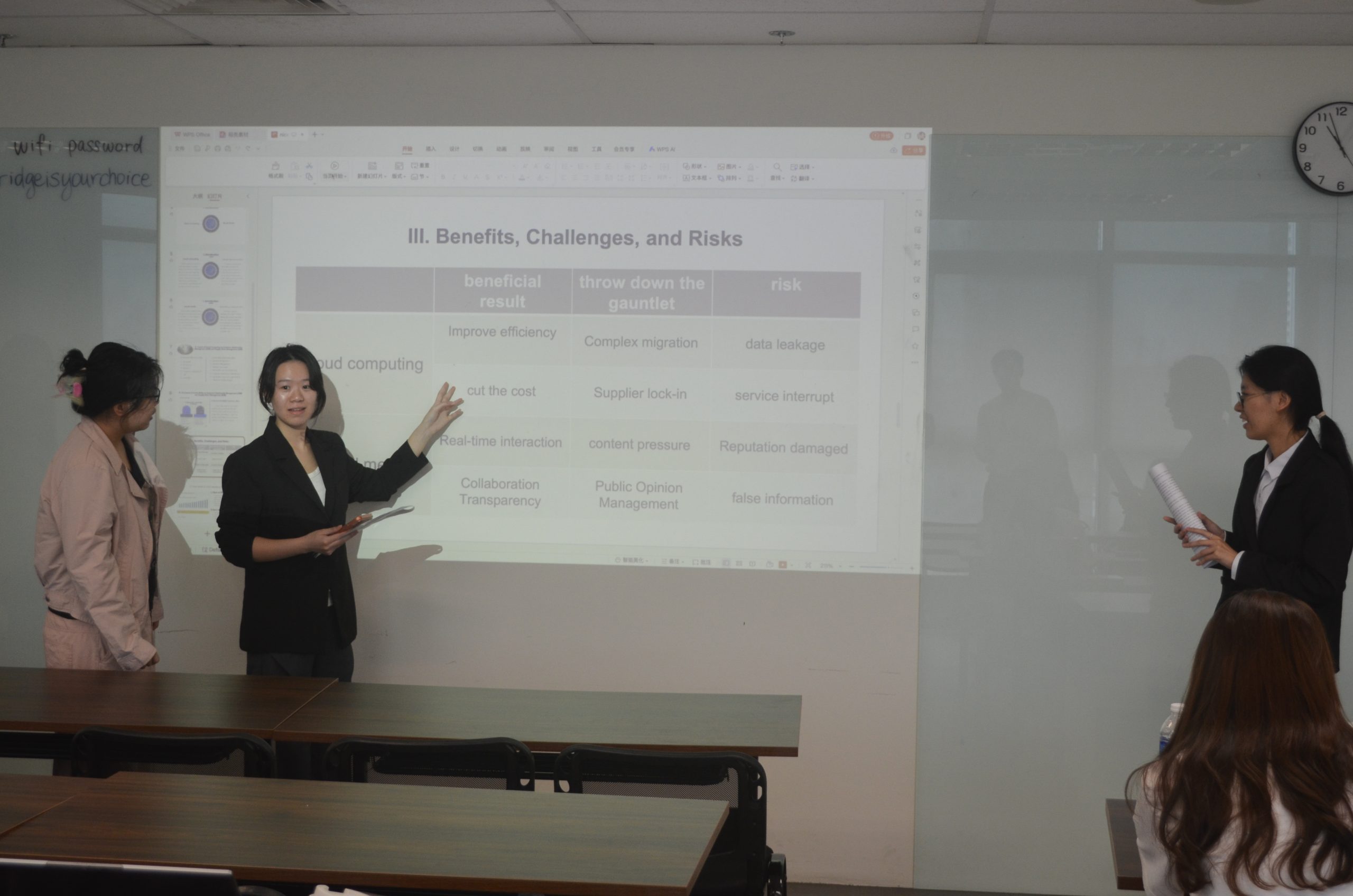
Through presentations, discussions, project work, and Q&A sessions, students are encouraged to explain their reasoning, defend their conclusions, and demonstrate their understanding of the work they produce.
These activities help students move beyond simply generating answers and towards developing a deeper understanding of concepts, stronger critical thinking skills, and greater confidence in their own ideas.
By challenging students to articulate their ideas and respond to questions, we aim to ensure that learning extends beyond the final output and into the thought process behind it.
The Question Every Institution Should Ask
As an educational institution, this raises an important question:
Are we preparing students to compete against AI, or are we preparing them to work effectively with AI?
As AI continues to reshape industries, the goal of education should not be to prevent students from using technology. Instead, it should be to ensure they know how to use it responsibly, critically, and effectively.
AI may generate information, but human judgement, adaptability, communication, and lifelong learning will continue to define professional success.
Source
The Straits Times. AskST Jobs: Can I use AI for take-home interview assignments?
https://www.straitstimes.com/singapore/jobs/askst-jobs-can-i-use-ai-for-take-home-interview-assignments