


How Singapore’s New “No Smartphone” Policy Reframes the Conversation About Student Focus
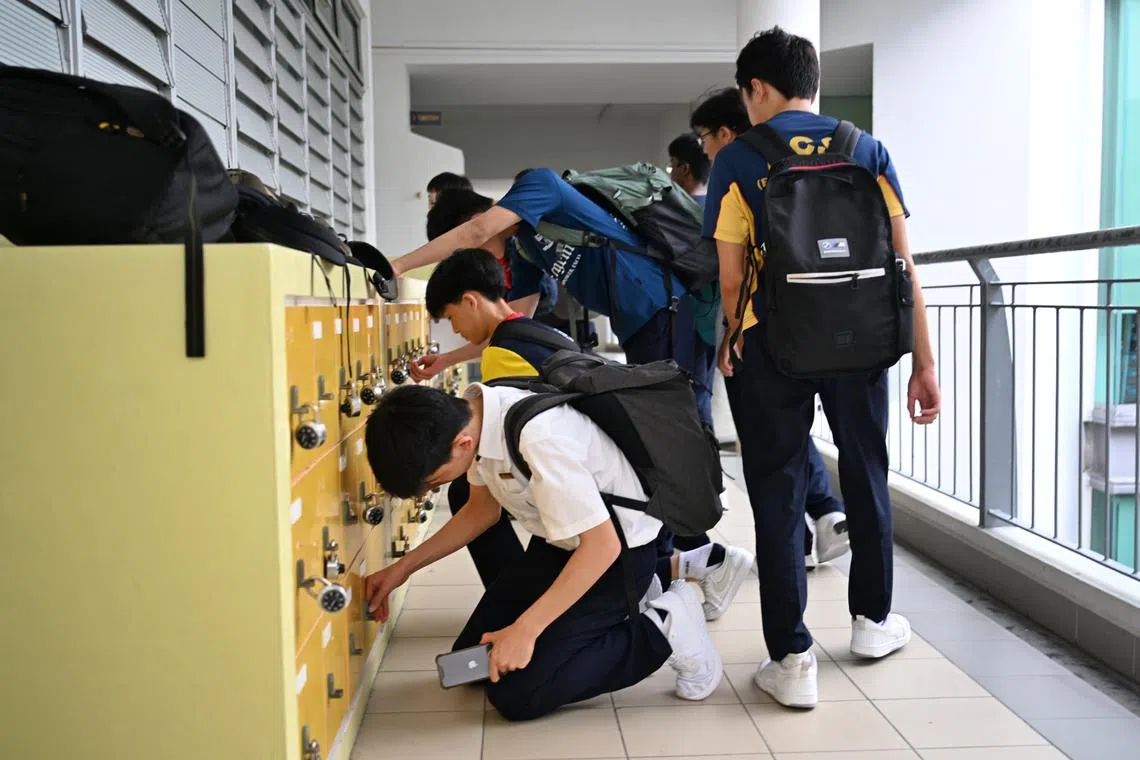
In a policy shift that has drawn wide attention from parents and educators, Singapore’s Ministry of Education (MOE) announced that all secondary schools will implement a campus-wide restriction on smartphone and smartwatch use from 2026 onwards. The rule applies throughout the school day — not only during lessons, but also during recess, CCA periods, self-study blocks and after-school academic programmes. Students will be required to place their devices in their bags or designated lockers, and may only access them with explicit permission.
MOE explained that this decision aims to reduce digital distractions, rebuild sustained attention, and restore more meaningful face-to-face interaction among students. Schools that piloted similar rules earlier reported encouraging results: students were more attentive during lessons and more socially engaged during breaks, with fewer disruptions caused by device use.

A Wider Issue: Digital Overuse and Its Impact on Learning Behaviour
The shift in policy reflects a broader concern about screen dependency.
Research conducted by the Institute of Policy Studies (IPS) found that both parents and teenagers in Singapore spend an average of more than eight hours a day on screens. Higher screen exposure was consistently associated with poorer sleep, elevated stress, and reduced concentration — all key factors influencing academic performance.
The national Digital Parenting Survey revealed similar trends among younger children. Nearly 60% of children aged two to six exceeded recommended weekday screen-time limits, with the figure rising to over 80% on weekends. Many parents expressed concerns about exposure to inappropriate content, cyber risks and digital addiction, yet only a minority felt confident in managing their children’s digital habits.
Taken together, these studies highlight an essential point:
Healthy learning depends on healthy attention, and attention is increasingly challenged by constant digital stimulation.

What This Means for AEIS Students: The Need for a Structured, Low-Distraction Environment
For international students preparing for the Admission Exercise for International Students (AEIS), focus and consistency are not merely beneficial — they are foundational to success. AEIS demands sustained English exposure, regular practice, and a stable academic routine. In reality, however, digital distractions often erode these habits.
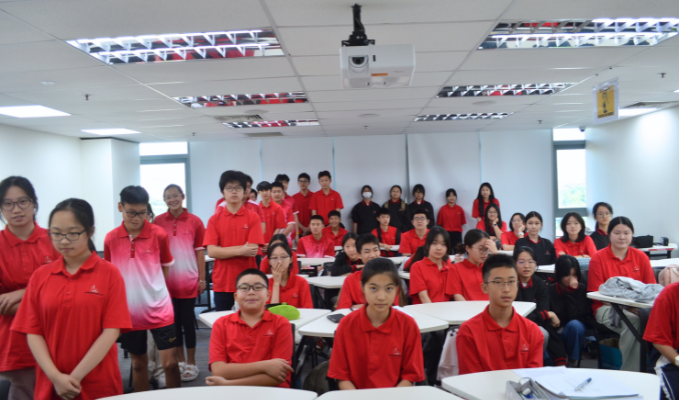
At Hanbridge Institute, our Full-Time AEIS Preparatory Programme has long adopted discipline structures similar to those now implemented in government schools.
Daily Device Collection
Students submit their mobile phones to teachers upon arrival and retrieve them only after dismissal. This approach:
- reduces disruption during lessons
- strengthens daily routines
- mirrors expectations in Singapore’s public schools
- helps students develop genuine academic focus
Parents frequently share that their children become calmer, more settled and more engaged in learning after adapting to this system.
A Full-Day Academic Model Designed Around the Realities of AEIS
Unlike part-time tuition or short enrichment programmes, Hanbridge Institute offers a full-day, school-like AEIS curriculum. Lessons run from 9:00 AM to 4:00 PM, with a structured timetable covering English, mathematics, writing, and academic reading.
This immersion helps students:
- adjust to Singapore’s school rhythm
- engage in extended English use throughout the day
- develop stamina for continuous learning
- form consistent habits essential for academic integration
A Team of English Specialists Guiding Students in Different Dimensions of Language
Hanbridge Institute’s full-time AEIS programme is taught by a team of English specialists, each responsible for a specific dimension of language development.
Reading & Vocabulary Development — Ms Priya
Ms Priya focuses on thematic reading and high-frequency AEIS vocabulary. Her lessons strengthen students’ ability to:
- extract key information
- navigate complex sentence structures
- build academic vocabulary systematically
This foundation benefits both English and mathematics performance.
Writing & Expressive Skills — Ms Suhaidah
AEIS writing requires authenticity, clarity and coherence — memorised model essays often result in low scores.
Through guided drafting, personalised corrections and repeated practice, Ms Suhaidah helps students:
- write from personal experience
- develop clear narrative flow
- refine language naturally
- avoid template-based writing
Her students gradually develop their own voice and confidence.
Academic English & Logical Reasoning — Mr Densen (Former GP Teacher, Hwa Chong Institution)
One of the programme’s strengths is the involvement of Mr Densen, who previously taught General Paper (GP) at Hwa Chong Institution, one of Singapore’s most prestigious schools.
GP teaching cultivates:
- advanced academic reading
- logical and critical reasoning
- argument structure
- linguistic precision
Mr Densen adapts these skills for AEIS by training students to:
- break down long English question stems
- identify logical relationships
- decode mathematical language
- translate English descriptions into actionable steps
- gradually form the habit of thinking in English
His approach directly addresses the root challenge faced by many international students: understanding English deeply enough to learn effectively through it.
From English Learning to English-Medium Learning
Through a sustained full-day immersion model, students transition from:
learning English as a subject → to learning all subjects in English.
This transformation is what allows them not only to pass AEIS, but also to thrive when they eventually enter Singapore’s mainstream schools.
Why Singapore Remains a Preferred Education Destination
Singapore continues to attract families seeking high-quality education due to its:
Cost-effectiveness
Overall study expenses are significantly lower than in major Western cities.
Bilingual Learning Environment
English as the medium of instruction, with a strong Mandarin-speaking community, provides an ideal environment for both academic and cultural adaptation.
World-Class Education System
Internationally recognised institutions, strong academic pathways, and globally portable qualifications.
Safety and Convenience
One of the safest cities in the world, providing peace of mind for parents and students alike.
Pathways for Work and Residency
Graduates may apply for work passes and, after gaining experience in Singapore, are eligible to apply for Permanent Residency (PR).
About Hanbridge Institute
Founded in 2003, Hanbridge Institute is a four-year EduTrust-certified institution known for its rigorous programmes and student-centric environment. In December 2024, the Institute became an official examination centre for Cambridge CEQ (KET and PET).
Hanbridge offers a comprehensive range of programmes, including:
- AEIS Preparatory Courses
- Singapore-Cambridge O-Level Preparatory Courses
- Undergraduate and Postgraduate Degrees (University of Suffolk, UK)
- Teacher training and professional development
- International study tours and academic immersion programmes
Located near Sentosa and Labrador Park, the campus provides a conducive environment for study, growth and cultural exploration.